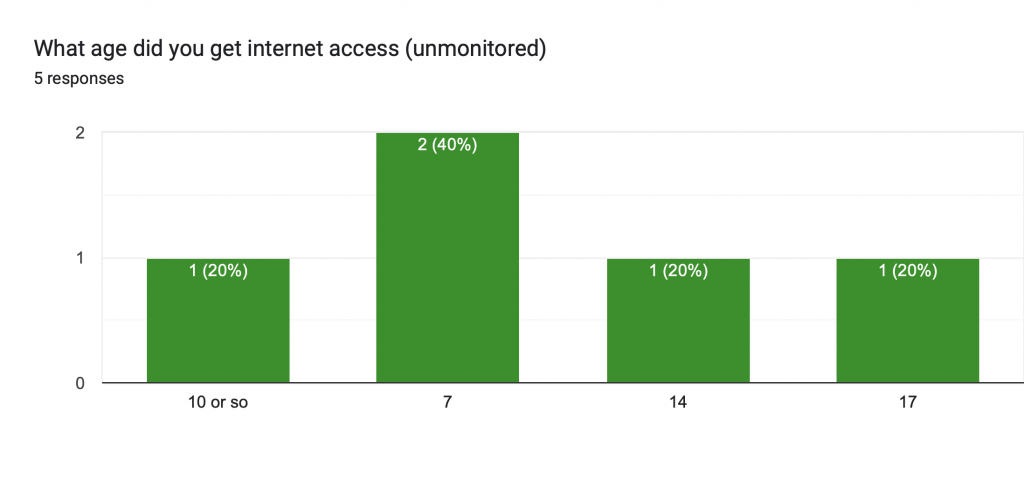
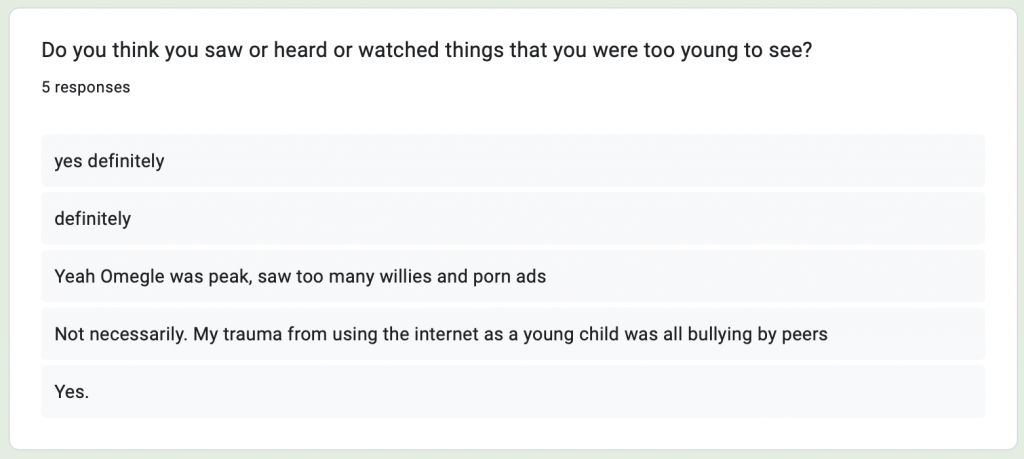
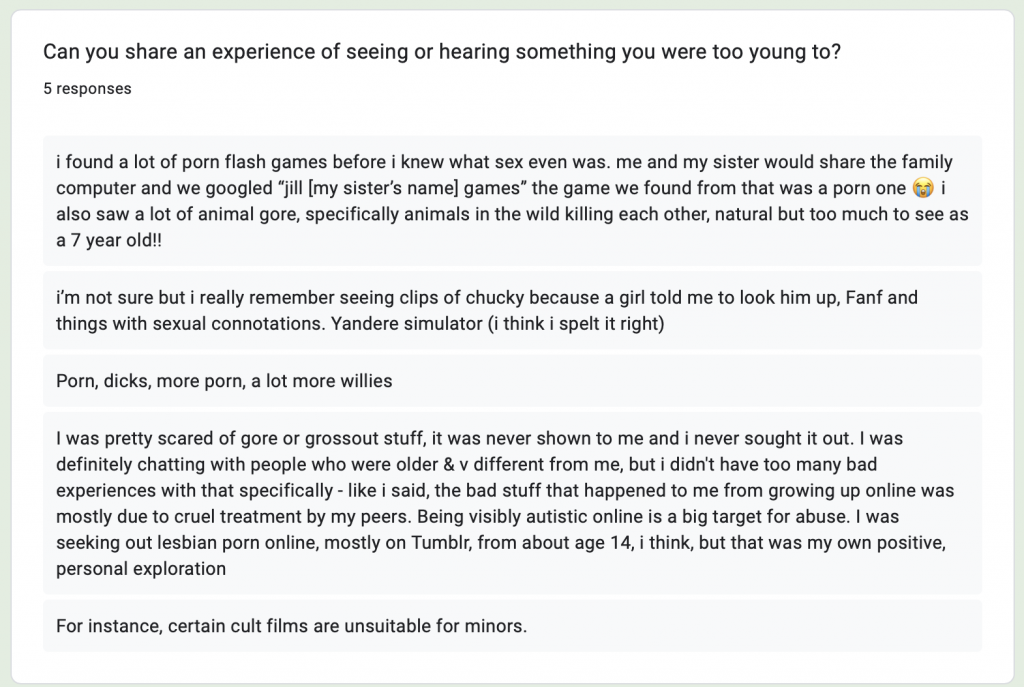
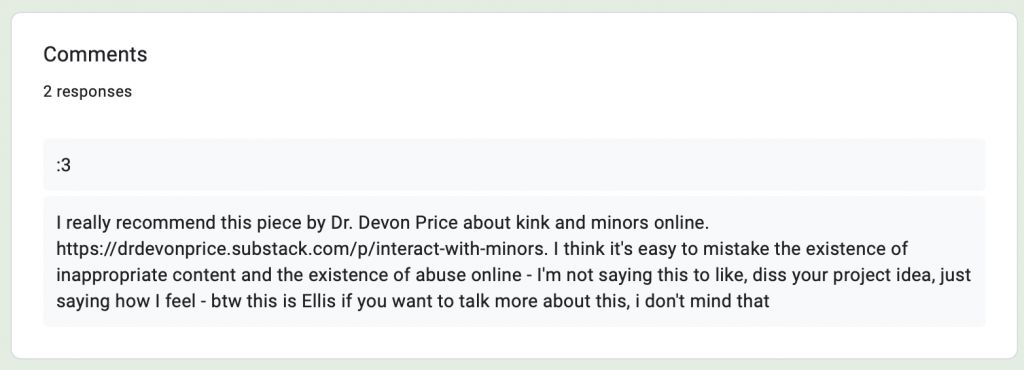
To develop a more comprehensive understanding of my theme, I conducted a survey designed to capture diverse perspectives and experiences that could further inform my work. The feedback obtained from this survey prompted me to consider aspects of my research that I had not previously taken into account.
I was particularly interested in the concept of adult content existing online vs abuse. My narrative is exploring the accessibility of adult content and how easily accessible it has been for minors however this is seemingly unclear through my work. This made me really think about how my narrative is communicated and whether I wanted to make it more obvious or lean into the subtlety.
Ethics of unmonitored access to the Internet:
- Freedom of information: Access is a human right according to article 19 of the UN declarations of human rights. However should adult content be accessible to those under the legal age of consent?
- Ethics of monitoring people: People have a right to privacy and autonomy of what they are accessing. However lack of monitoring can lead to the rise of dangerous behaviour such as cyber bullying and predatory behaviour.
- Protection and harm prevention: Taking into consideration of nonmalificence (Do no harm) requires steps of prevention. This could look like monitoring, age controls, ratings etc.
- Responsibility and Accountability: Behaviour online is down to individual behaviour. However children are still legally considered a parent’s responsibility and there for their access online should be monitored for safety reasons.
I also considered my own position of the narrative. I was raised by very involved parents who protected me and what I was able to access on the internet until I was of legal consent age. Even with this monitoring, adult content was still accessible with accounts bypassing the protections etc. With my parents being as involved as they are, I was always honest and open re things that were being shown to me on the internet. This changes how I view this narrative. I was protected and I am approaching this from that viewpoint. I have limited understanding of the other side where it was accessible and one maybe enjoyed accessing it. For me, any inappropriate content, whether age appropriate or not, made me feel targeted. This isn’t the case for others. I want to consider this within my narrative, focusing on a subtlety that others who feel the same as me would notice but is maybe otherwise unnoticeable.
Adult Content and the Cognitive Affects of it:
Adult content (pornography) has been shown to seriously affect cognitive behaviour, causing long term damage to young minds. Mental health.com lists the main affects as follows:
“The Pleasure and Reward Center: Dopamine, the brain’s primary reward neurotransmitter, is released whenever a person experiences pleasure. When there is a repetitive release of dopamine over time, the reward center of the brain becomes altered, leaving a person needing more stimulus to achieve the same result. As the brain gets used to the constant highs and lows associated with regular porn use, it starts to create new patterns that drive a person to continue watching pornography. [1]
Cognitive Function: Individuals who suffer from porn addiction often struggle with cognitive function, exhibiting impaired decision-making. Most notably, this is demonstrated by preferring short-term small gains over long-term large gains. [2] Porn addicts can also have a hard time accurately perceiving the negative consequences of their behavior, which creates a disconnect between their internal moral compass and society’s moral code.
Emotional Regulation: Individuals who have difficulty regulating their emotions are more susceptible to reaching for porn in effort to distract themselves. Over time, this pattern can easily morph into a full-blown addiction, leaving them in a cycle of reaching for porn to avoid uncomfortable emotions, only to further dysregulate themselves. ” (Wirth, L. (2025) The brains of porn addicts, MentalHealth.com. Available at: https://www.mentalhealth.com/library/the-brains-of-porn-addicts (Accessed: 31 October 2025). )
This information has influenced my work from a protest view point. The easy accessibility of this content is shown to have a negative affect on brain development, decision making, dopamine factors and still remains unmonitored. Innocence is being taken away through this unmonitored access, for some voluntarily, for some they do not seek it out. This has an impact on how I want to portray my narrative as part of me wants to make it really obvious to raise awareness for this issue.
Alongside all of this, adult content has previously been accessible from any age and even when reduced to an age limit, is easily bypassed. The legal age of consent in the uk is 16 and there are individuals as young as 7 being exposed to pornography and other content. This in and of itself poses a legal and ethical question: How do we monitor minors and can we realistically create a society where this kind of content is limited until 16 if not 18?
Leave a Reply