Author: Elizabeth Stewart

  • Disseminating Research

    Disseminating Research

    Definition:
    The act of spreading news, information, ideas, etc. to a lot of people.

    For this element, you will begin researching by looking at your interests and possible subjects broadly. Then focus your research into a more specific research question, hypothesis or statement, which succinctly communicates your subject and enquiry.

    While you are collecting and analysing your research, you should be thinking about how you will communicate your research journey into a possible output. You will then bring together you most important pieces of research, and your analysis of these into your chosen format. This could be:

    • A short film or animation (1/2 minutes).

    • A physical publication or zine.
    • A digital publication or zine.
    • A storyboard.

    • A series of images.
    • A 3D output.
    • Something more relevant to your project?

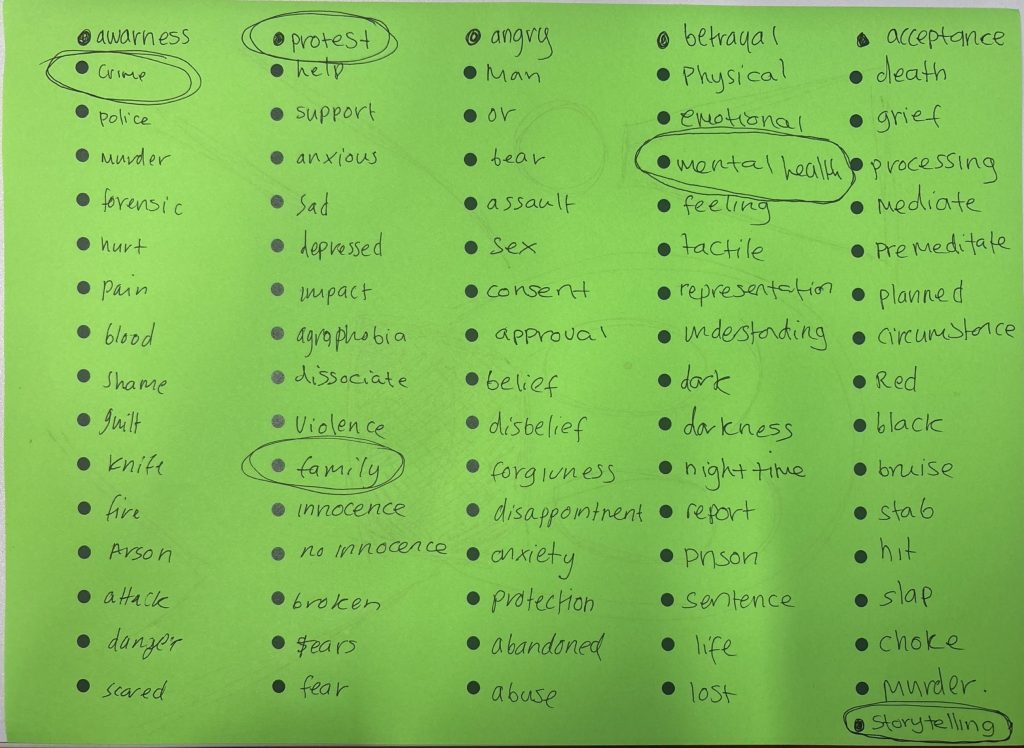
    What do you want this project to feel like?

    Words relating to this project:

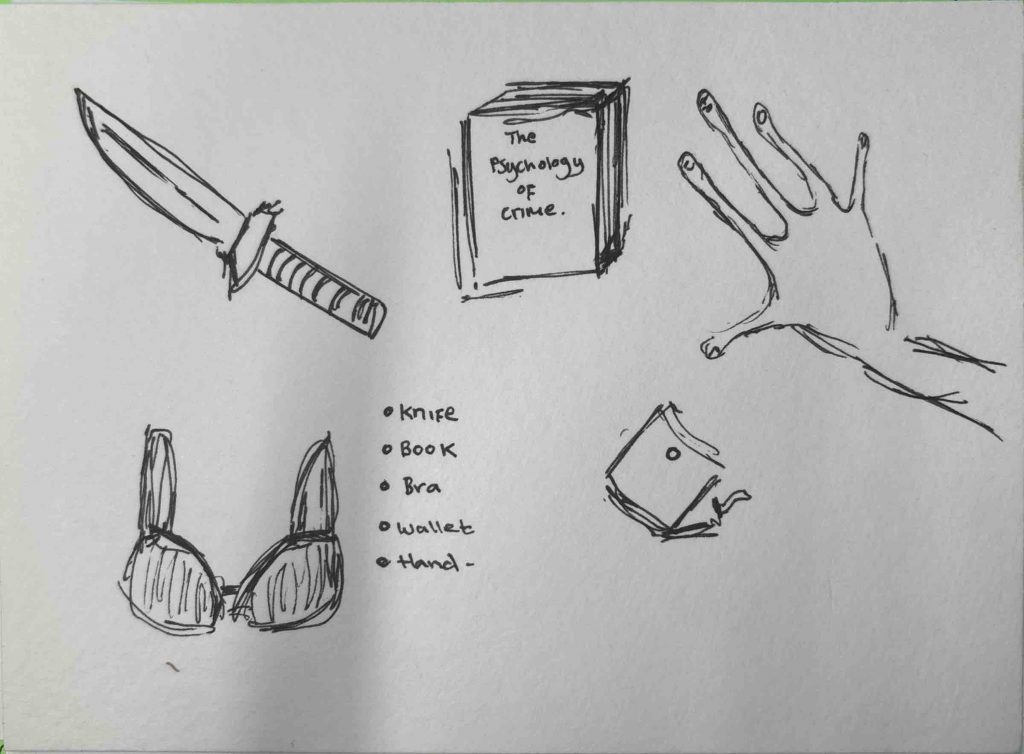
    5 things I’ve touched that relate to my project idea:

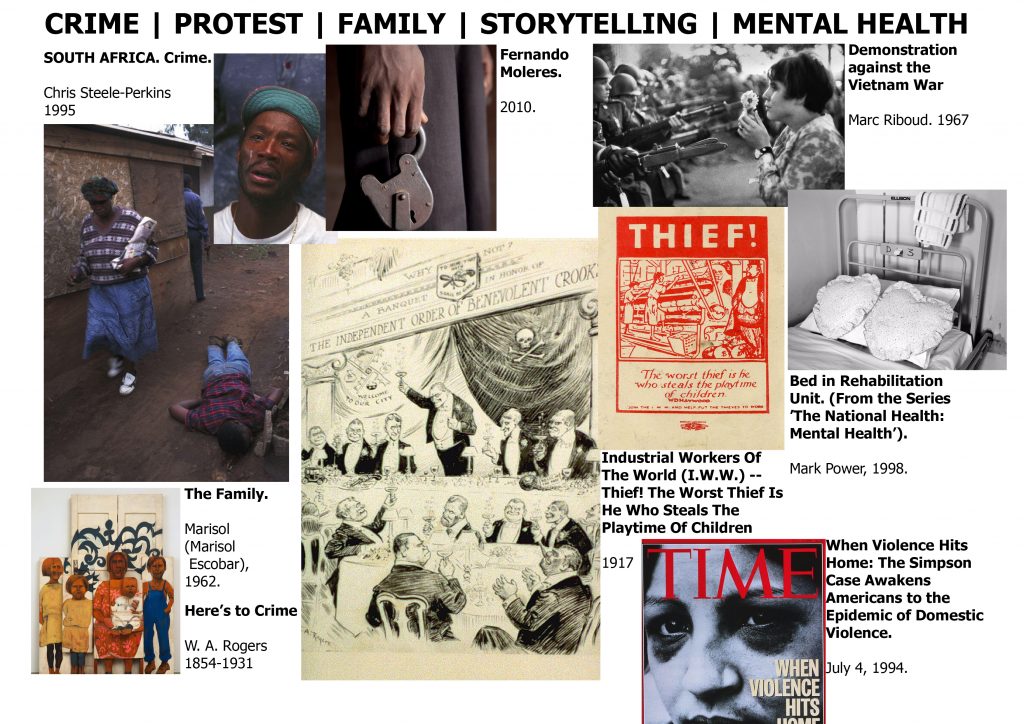
    5 Words & Archives

    Research Trip

  • Self Initiated Project

    • Deadline – Wednesday 13.5.26

    You will write your own brief based on an area of interest to you. During this project you will spend dedicated time culminating a large body of work, showcasing evidence of thoughtful and rigorous experiments within enquiry, knowledge, process, communication and realisation.
    You will need to submit a Portfolio of Evidence in the form of a pdf and a blog, documenting your journey through the project(s), including research materials, analysis and how these are synthesised into your practice. Your portfolio can include reference to notebooks, sketchbooks, research files, critical reflections and evaluations. It needs to clearly communicate your project journey and outcomes in answer to your own briefs.

    Outcome:

    An extensive body of work which showcases your identity as a creative practitioner. All outcomes must be decided in consultation with your tutor.

    Self-Initiated Project Structure

    Disseminating Research

    Checkpoint, Week 13 Studio Lab: Friday 23rd January 2026

    Your Practice, In Practice

    Checkpoint, Week 19 Coaching Tutorials: Wednesday 4th March 2026

    Show Up & Show Off!

    Checkpoint, Week 23 Coaching Tutorials, Wednesday 22nd April 2026

    (Formative Assessment)

    Final Hand-In:

    Week 26: Wednesday 13th May 2026

    (Summative Assessment)

    Disseminating Research

    The first part of the structure within the Self-Initiated Project
    is designed to help you focus your research and think about
    how you can communicate this to an audience, not just as academic information, but also as a considered visual output in its own right.

    This research output could become part of your portfolio, which
    you could show to someone to help you secure a job, funding, further study or other opportunity. How you communicate and discuss the ideas that underpin your projects can help you more fully develop your work, find new directions, make sure that your project is as strong as possible, as well as having an audience and validity.

    Your Practice, In Practice

    The second part of the structure within the Self-Initiated Project
    is designed to help you focus on making and experimenting within your practice. Engaging in rigorous experimentation of media and materials that are both relevant to and push the boundaries of your chosen subject matter. We wish to see both quality and quantity, showcasing a creative practice that evidences commitment to the creation of work to a high professional standard.

    During this time, there will be opportunity to present your work
    to a wider audience. We wish for you to consider and explore the synthesis of message and medium, unified with personal style and a clear tone of voice.

    Show Up & Show Off!

    The third and final part of the structure encourages the development of your Self-Initiated Project, with a focus on demonstrating full responsibility of time management whilst building a body of work which meets and expands upon the appropriate standards of professional production.

    Submission Information: 4o page pdf & Blog
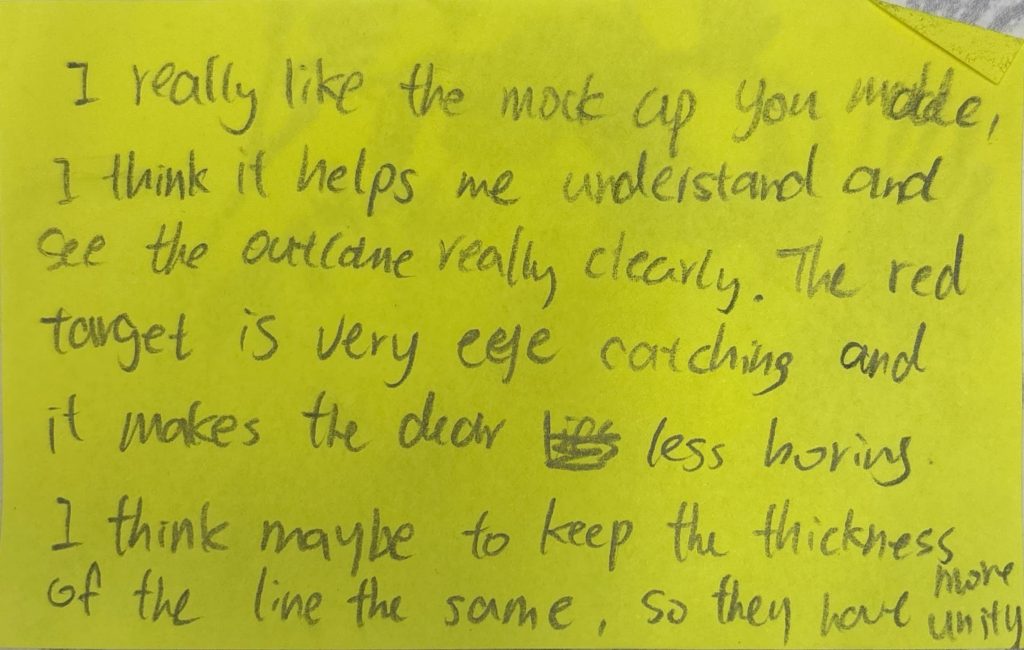
  • Client Feedback Session 2

    We had a final client feedback session where individual work was picked to be put into the domestic setting.

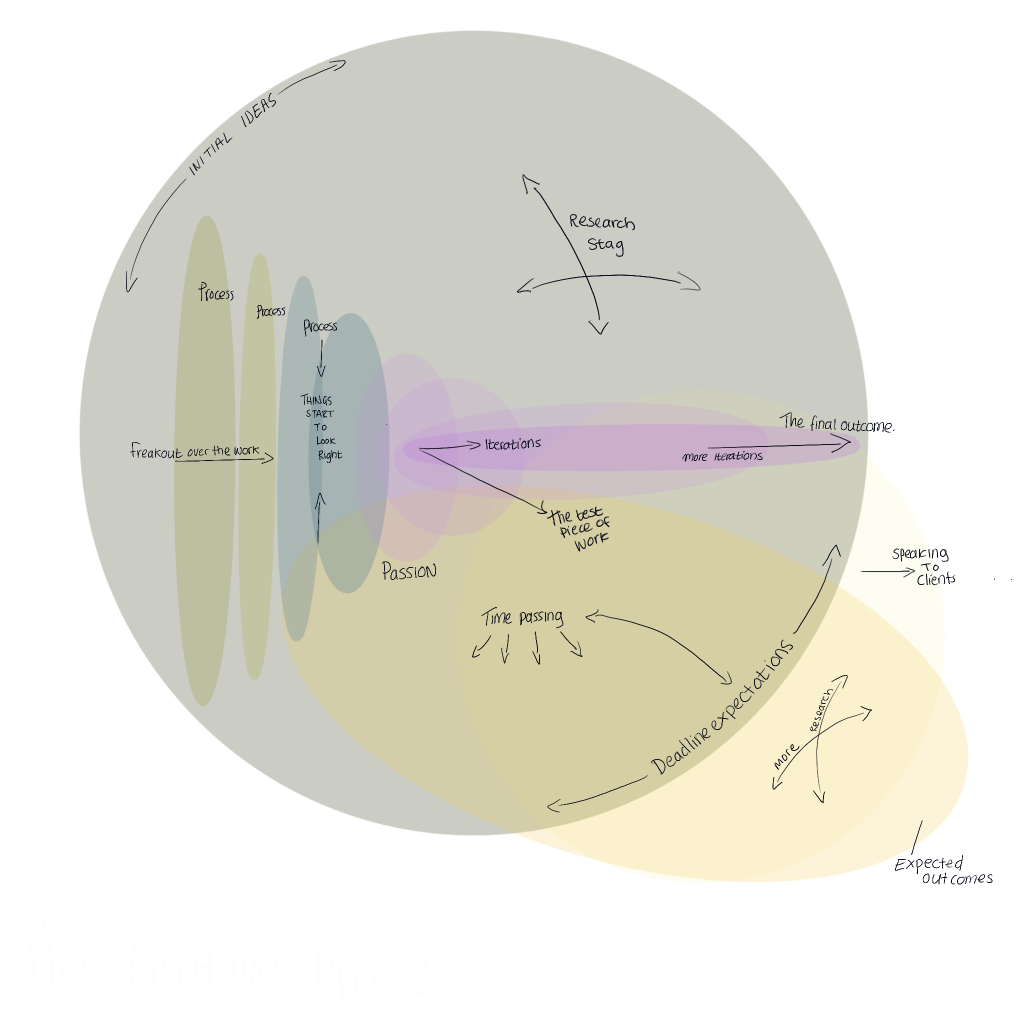
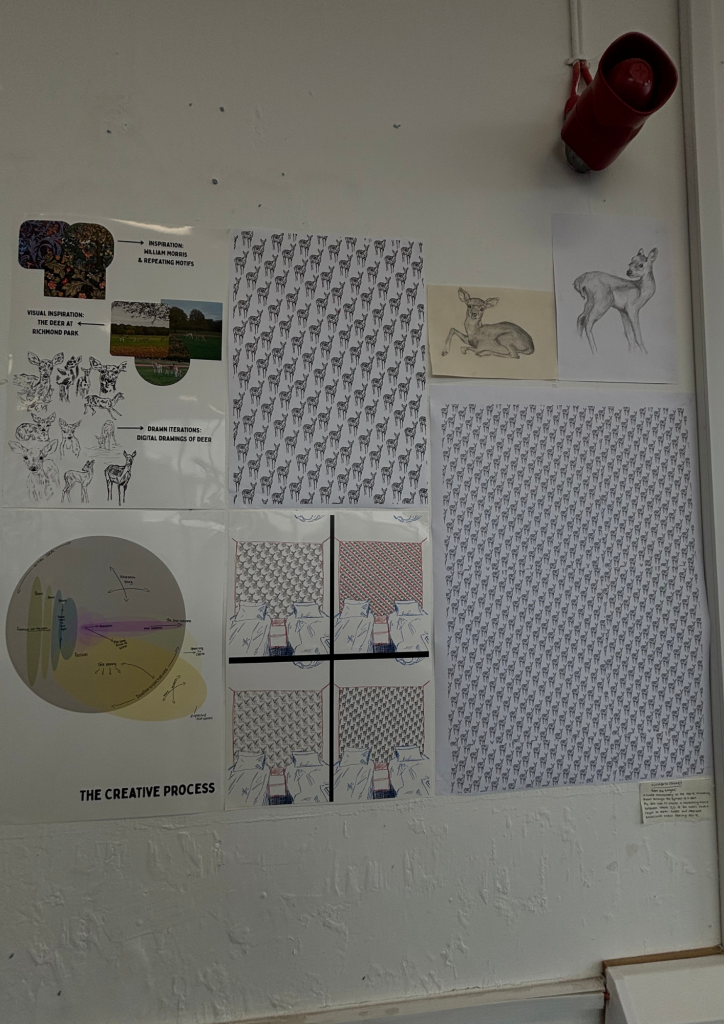
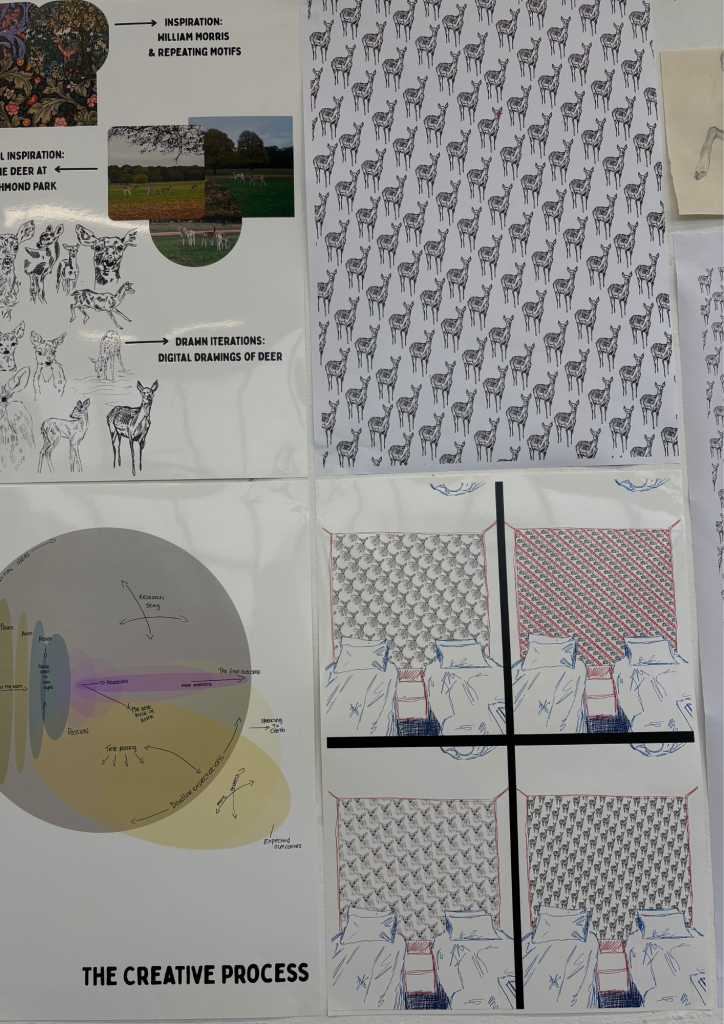
    I presented a series of work around wallpapers. I included by creative process and looked at the ways in which I work.

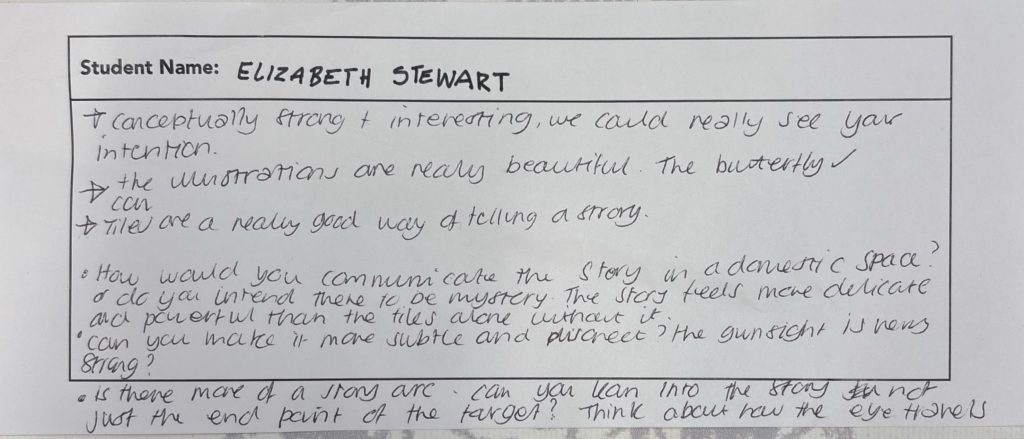
  • Studio Feedback 1

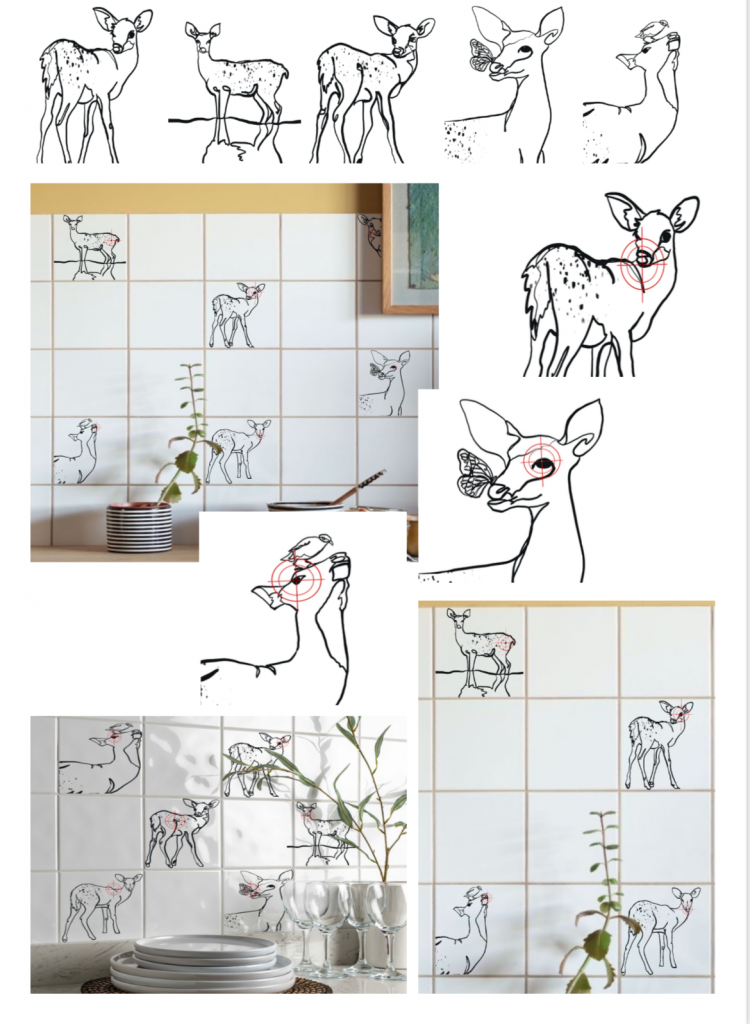
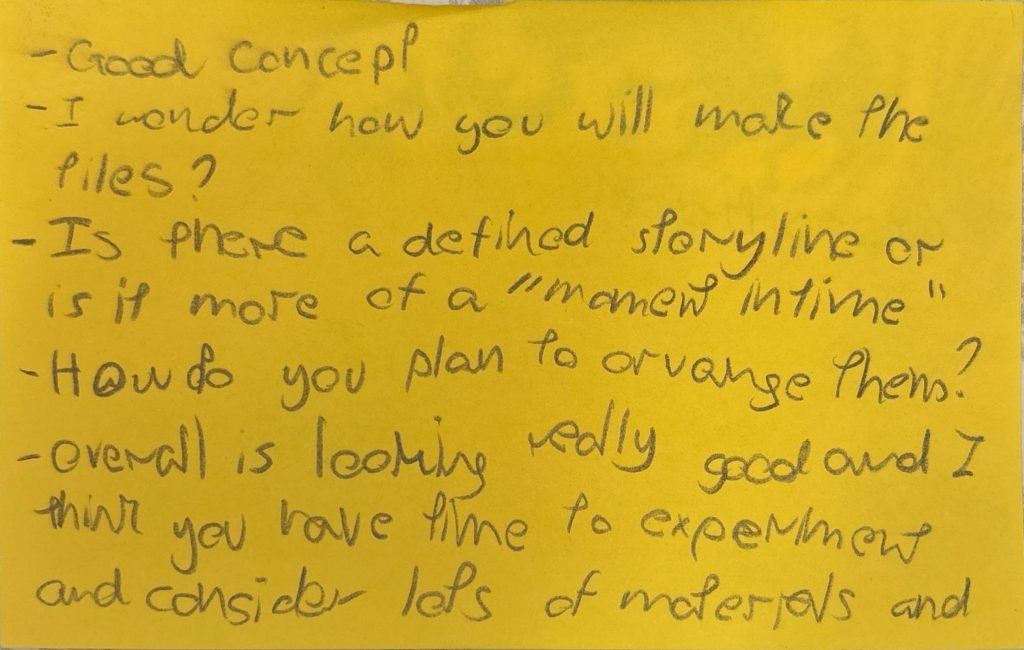
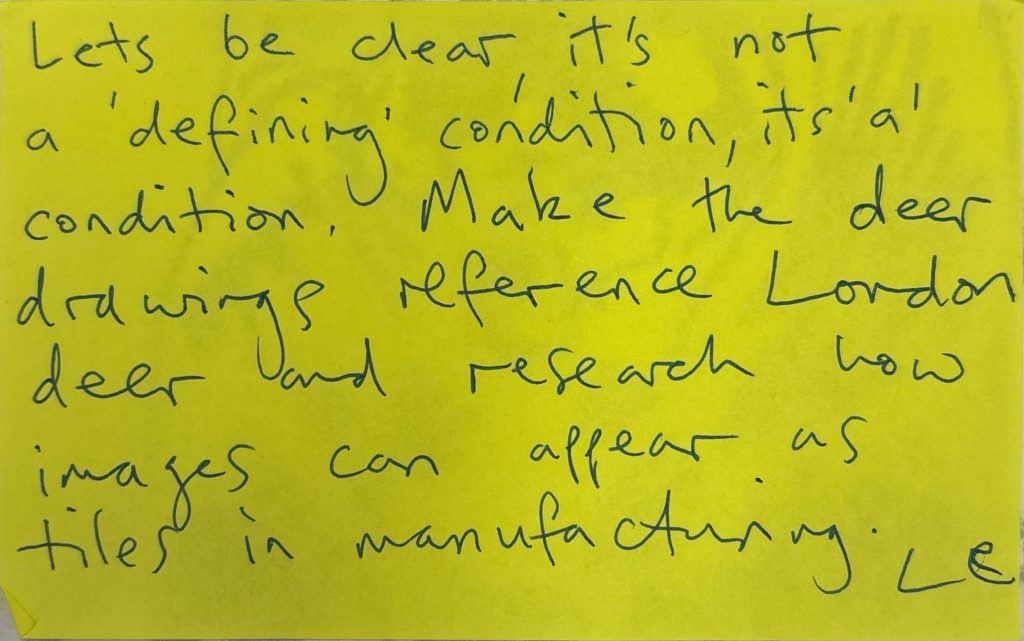
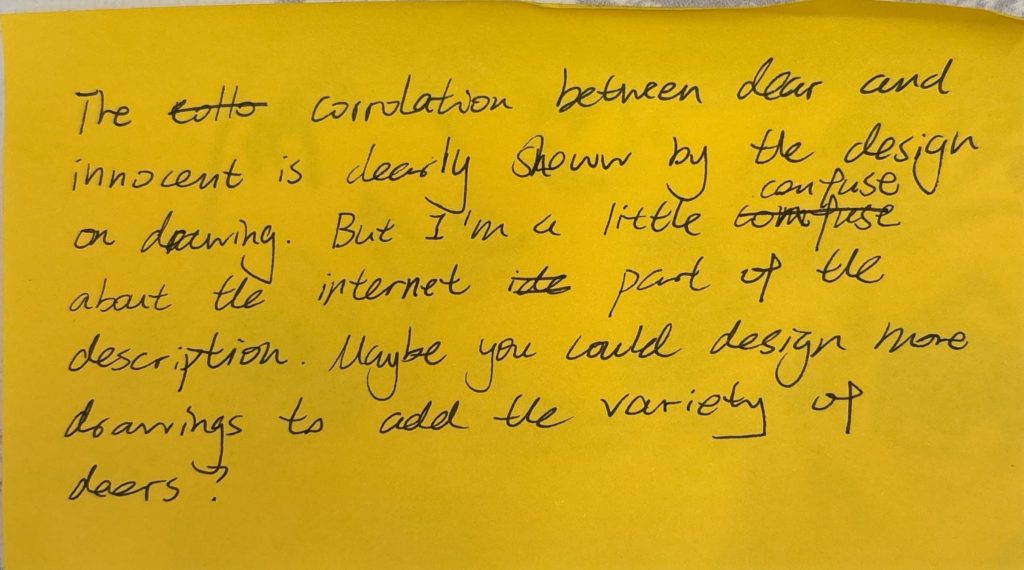
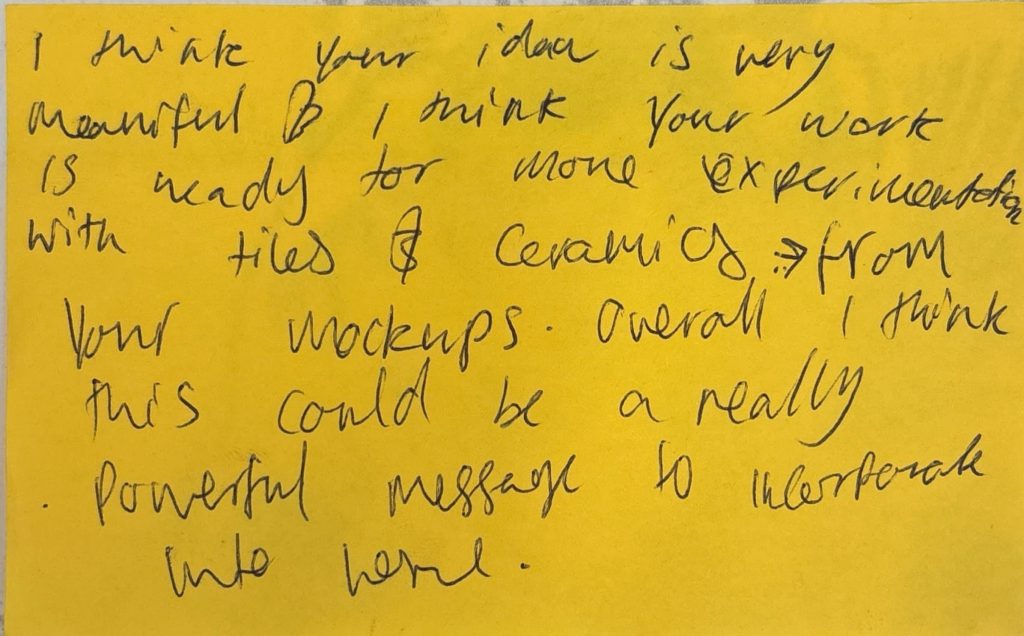
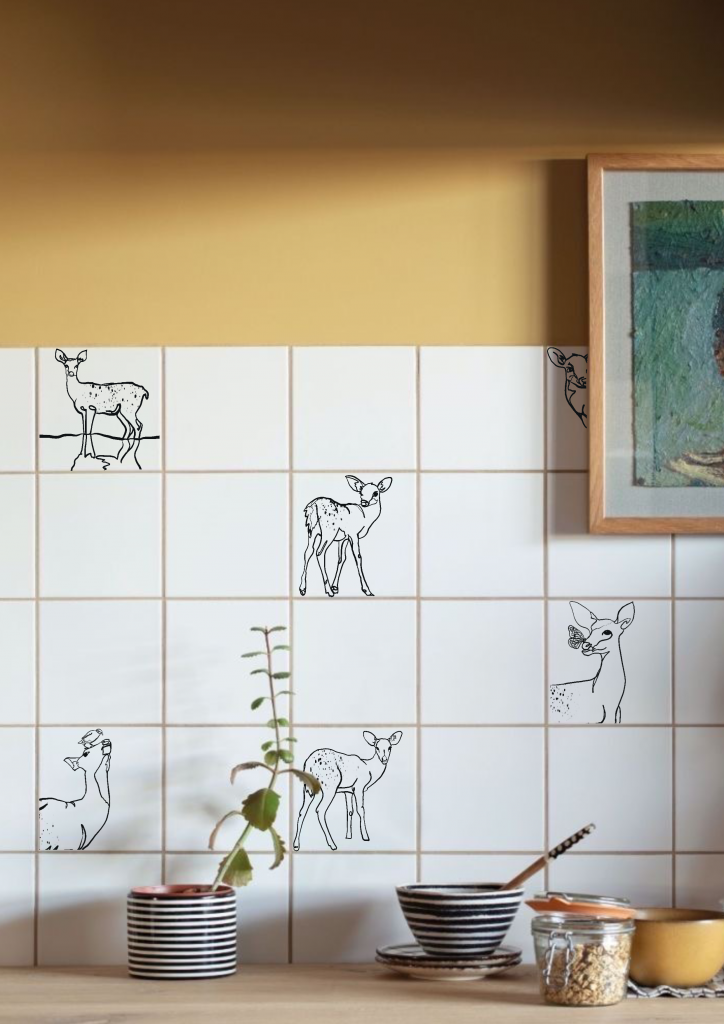
    We had a studio session where we received client feedback. For this session, I chose to present the tiles idea.

  • Mockups

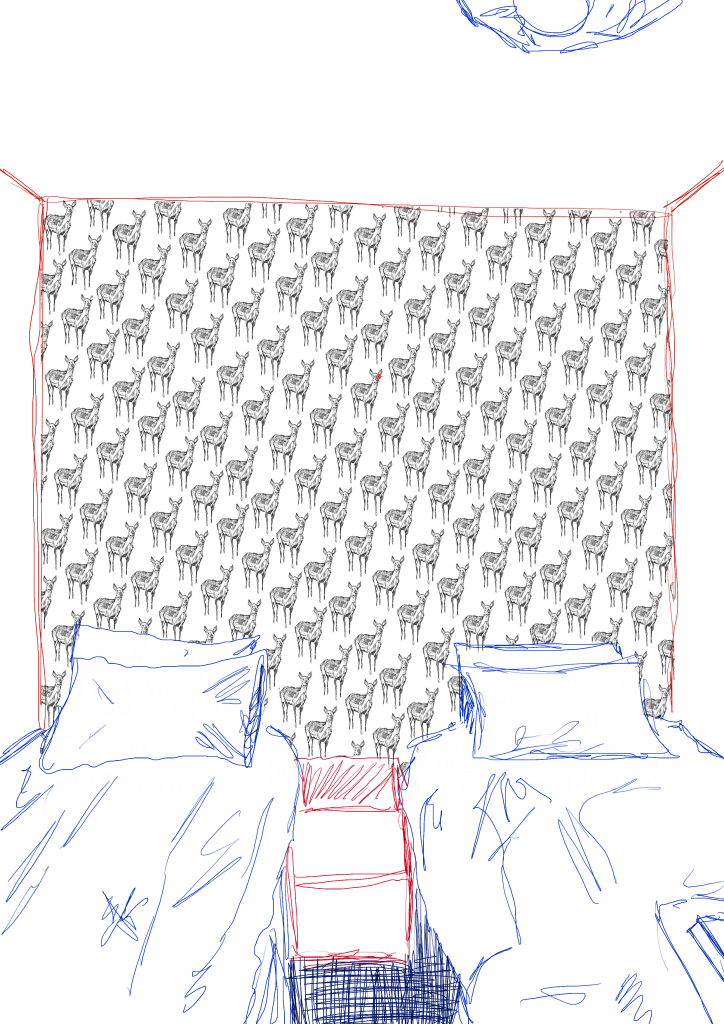
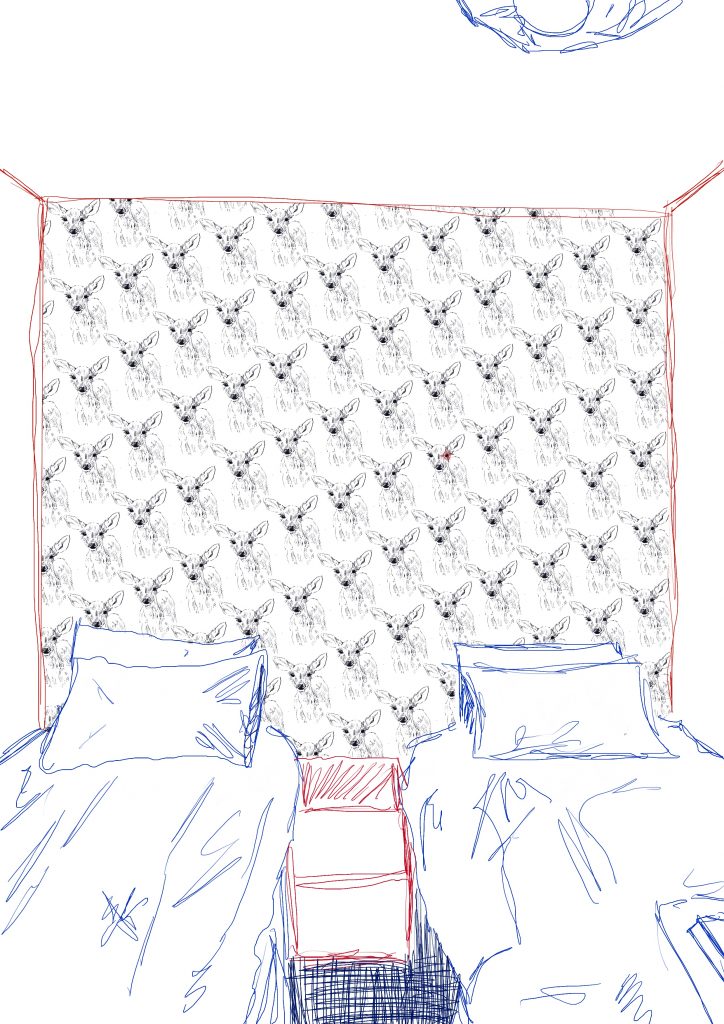
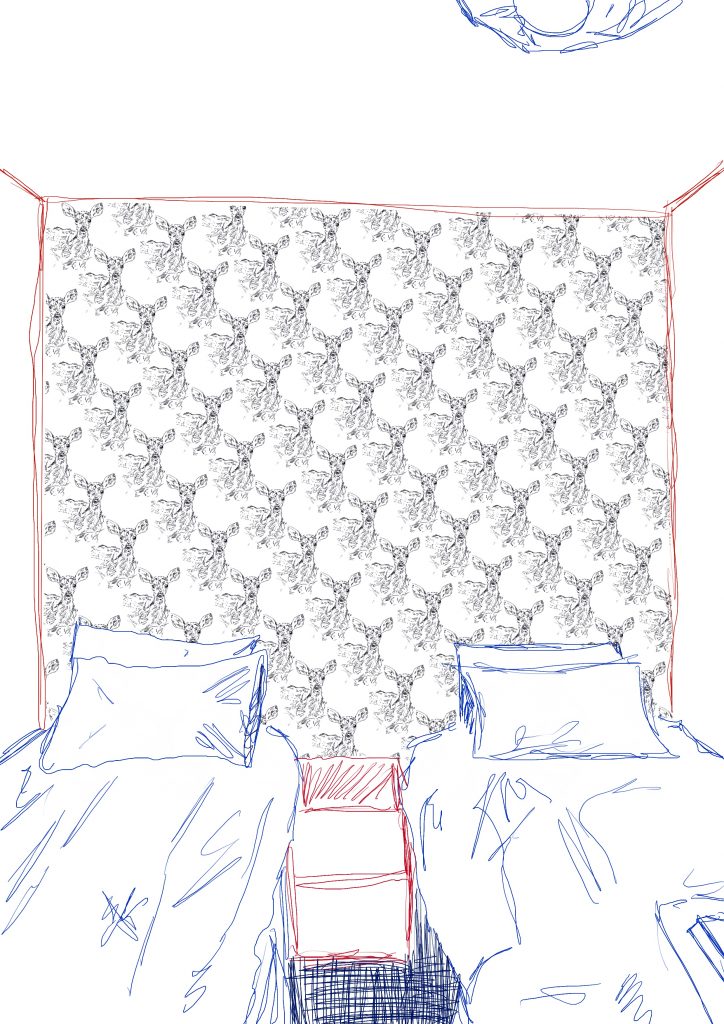
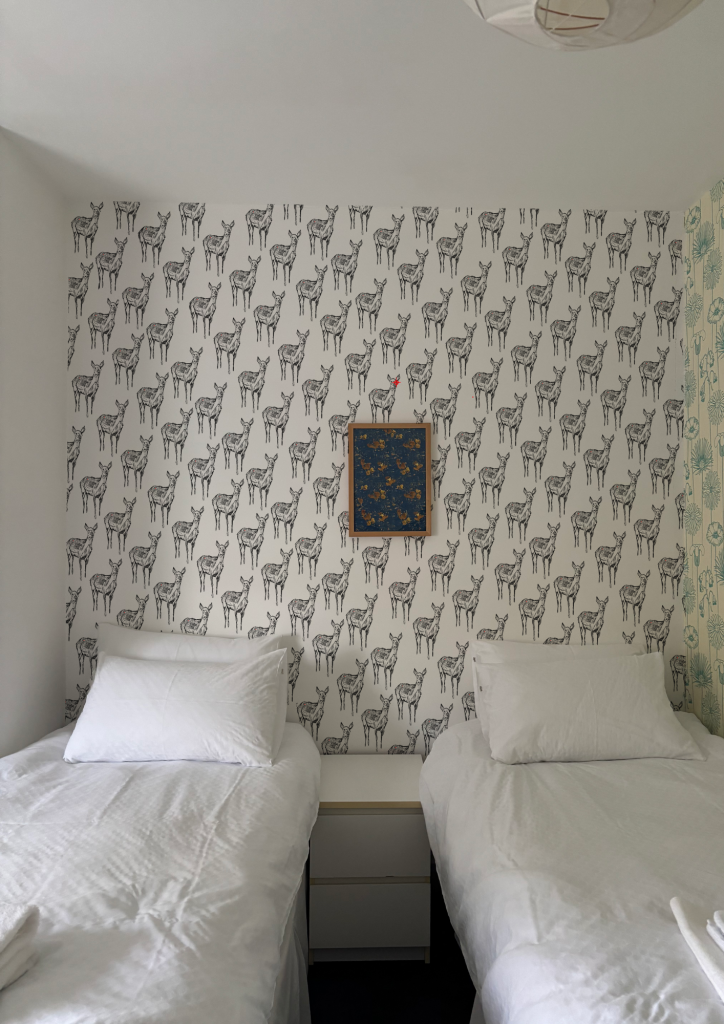
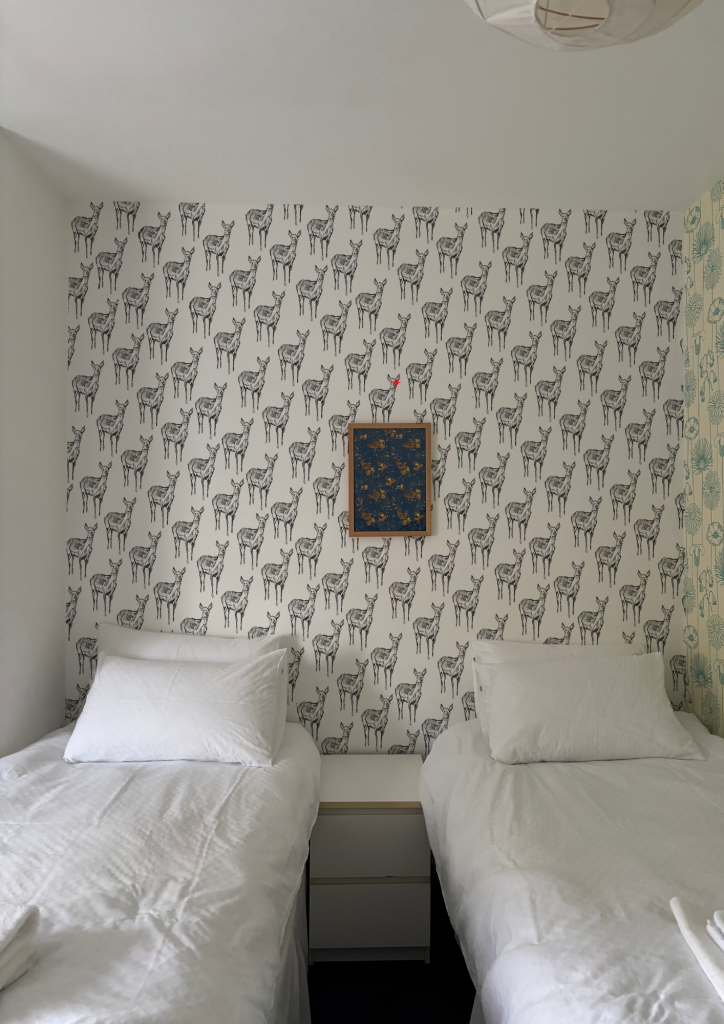
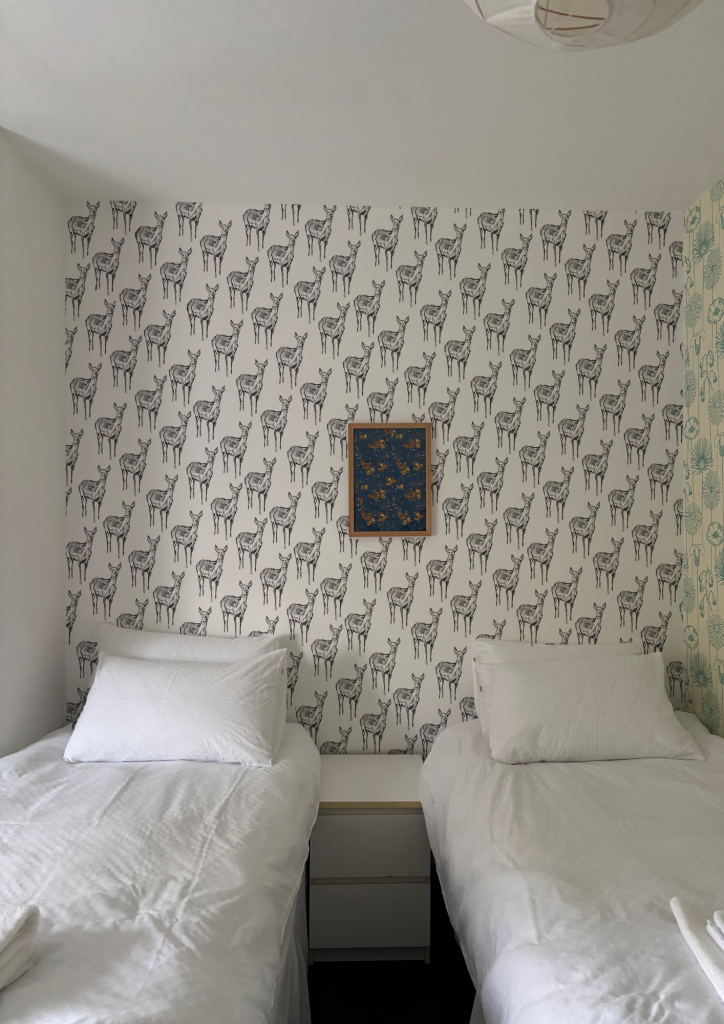
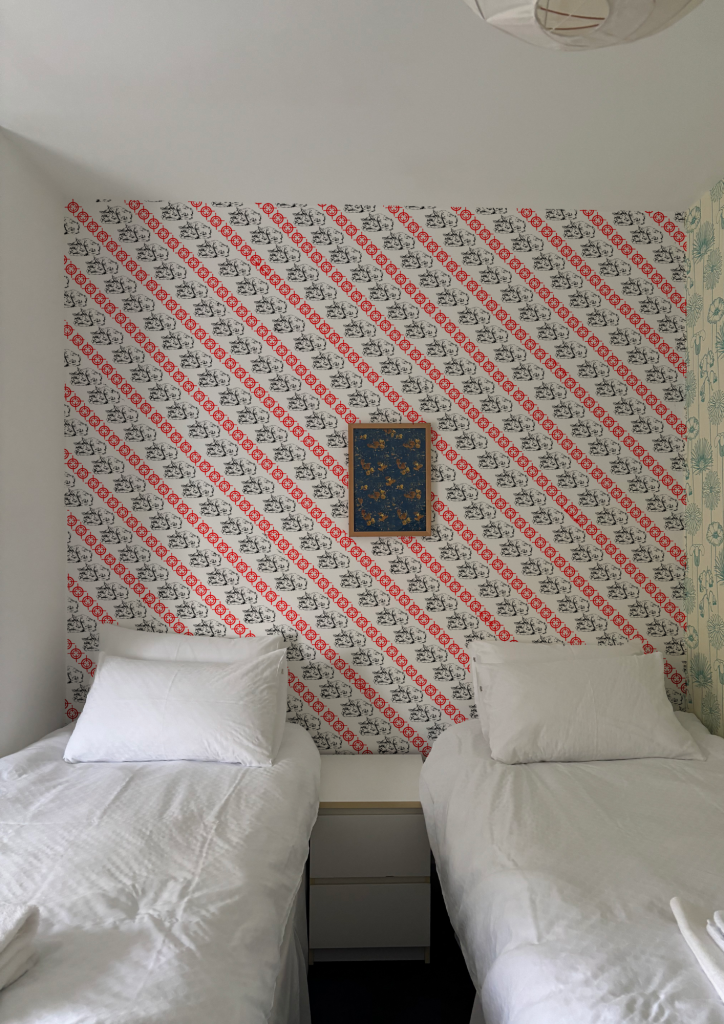
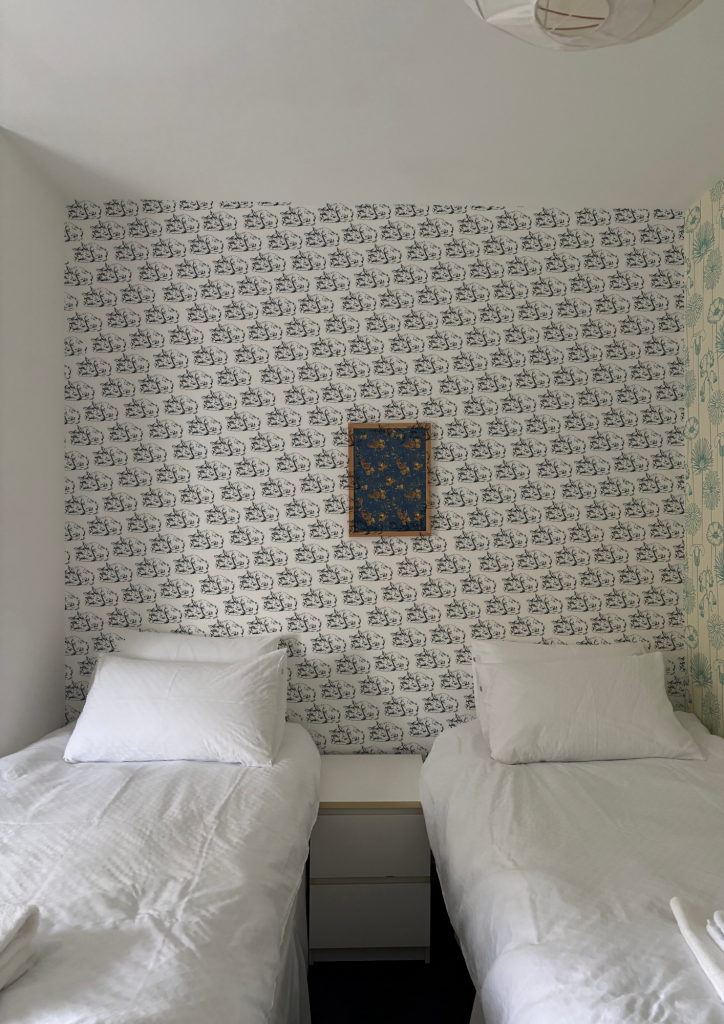
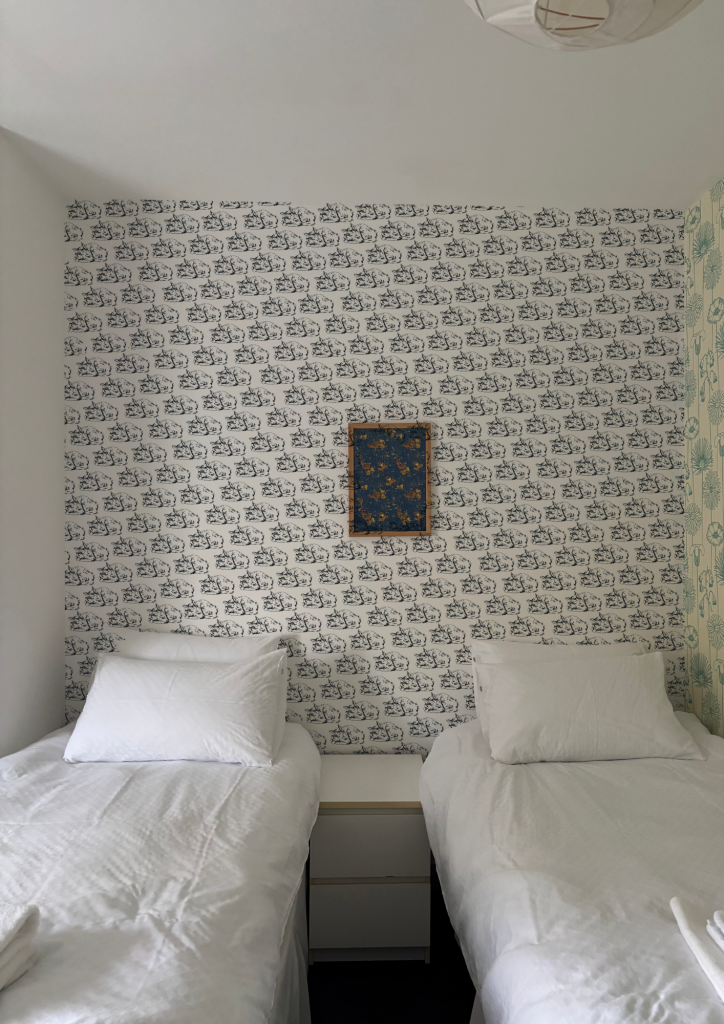
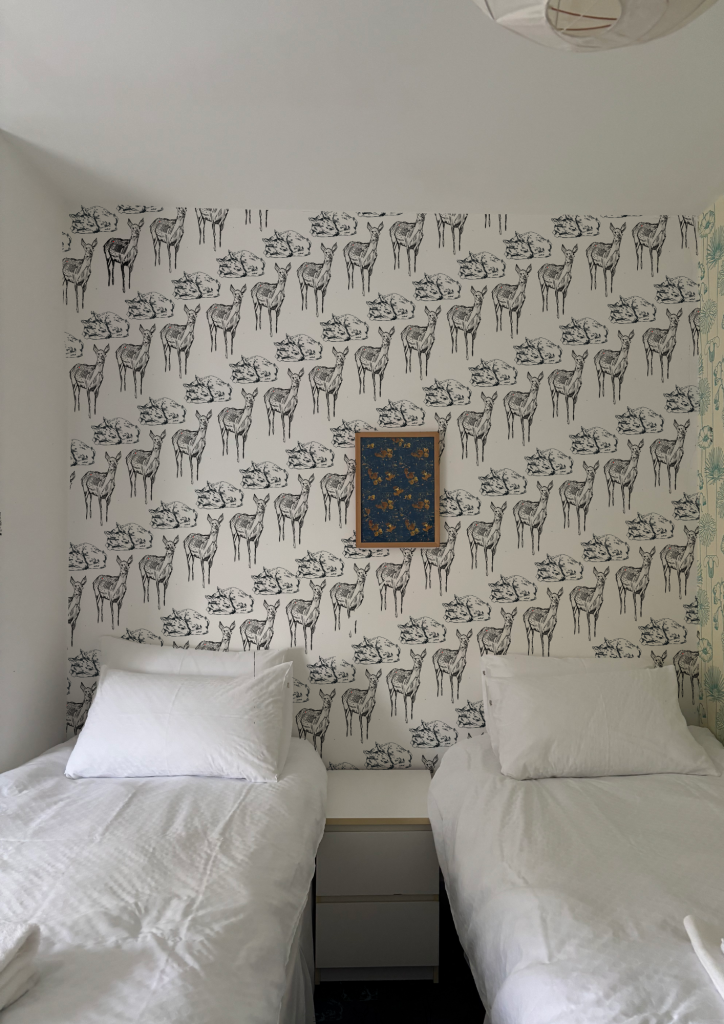
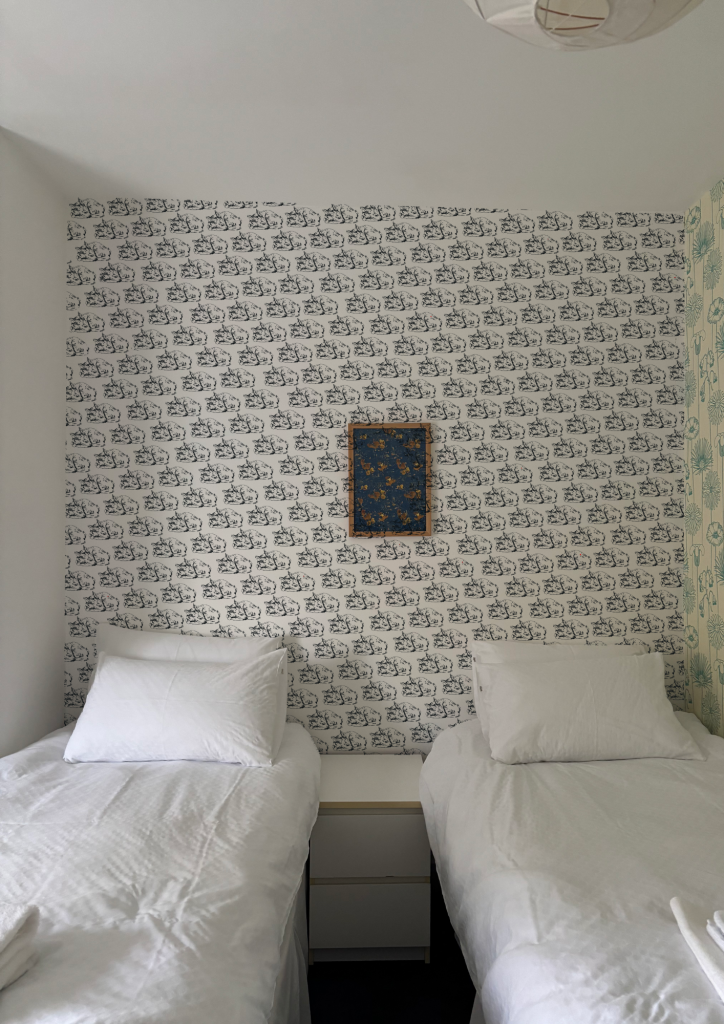
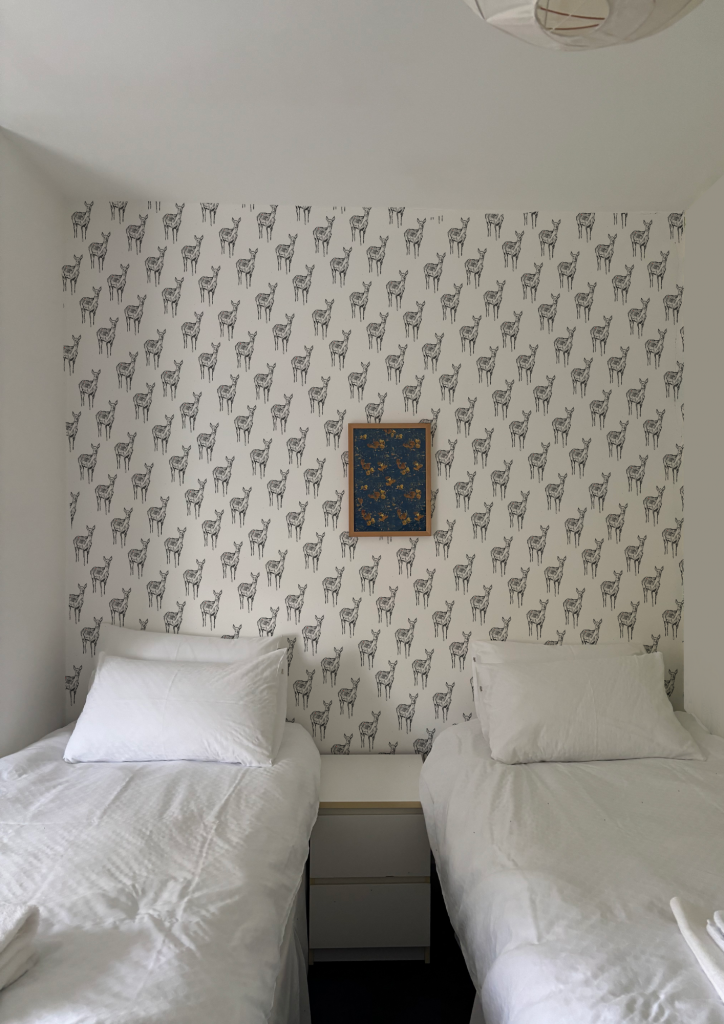
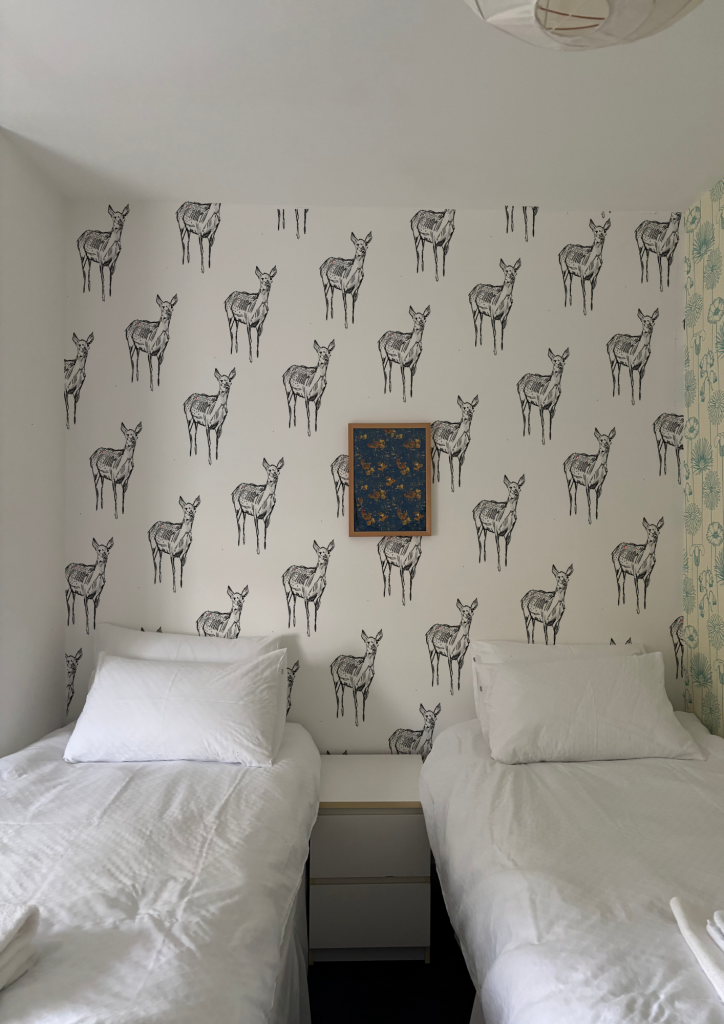
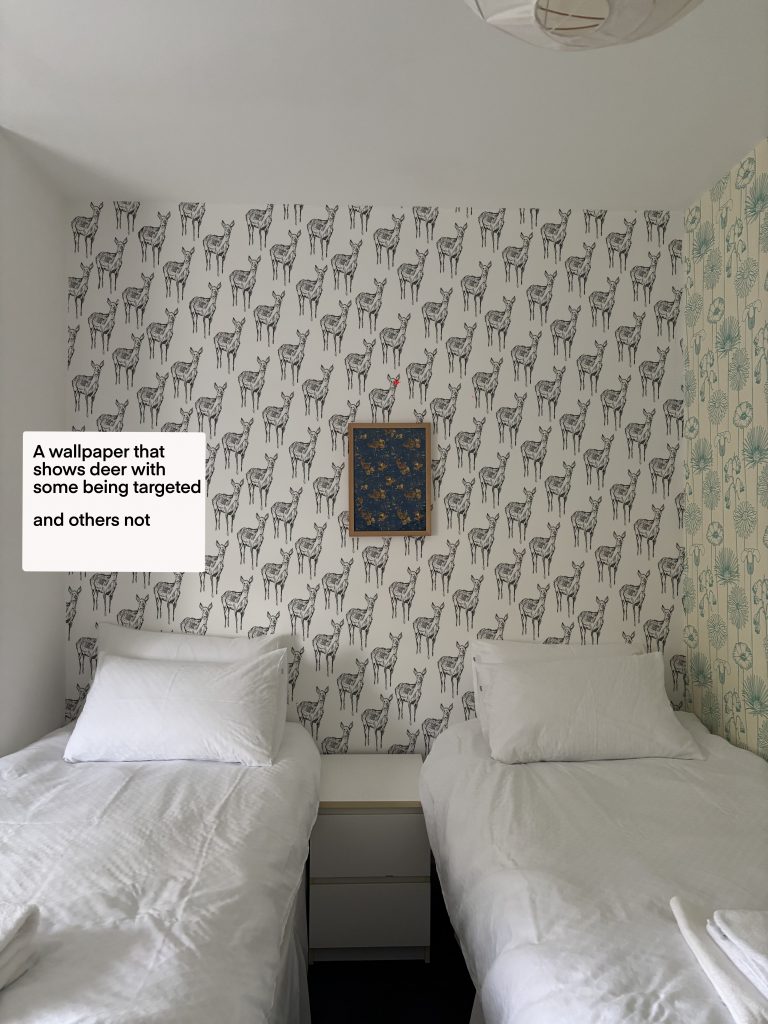
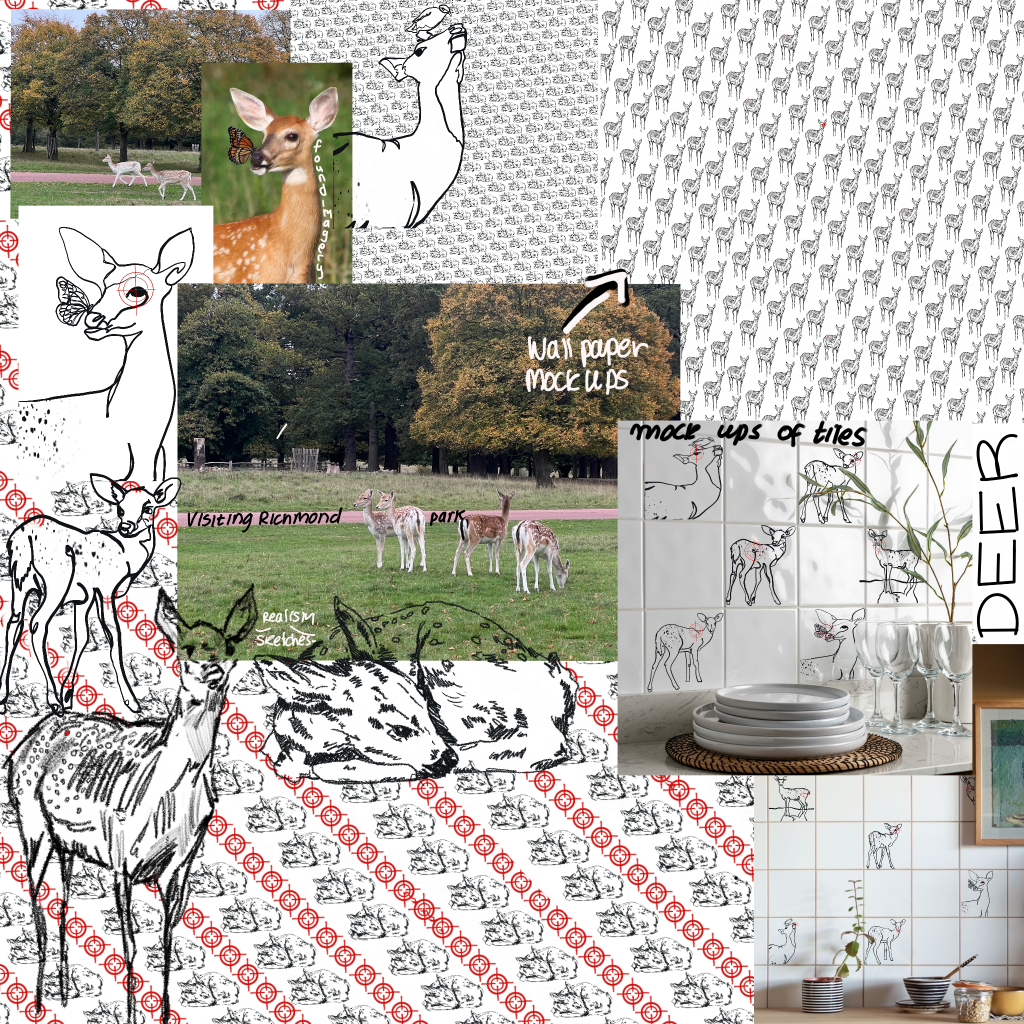
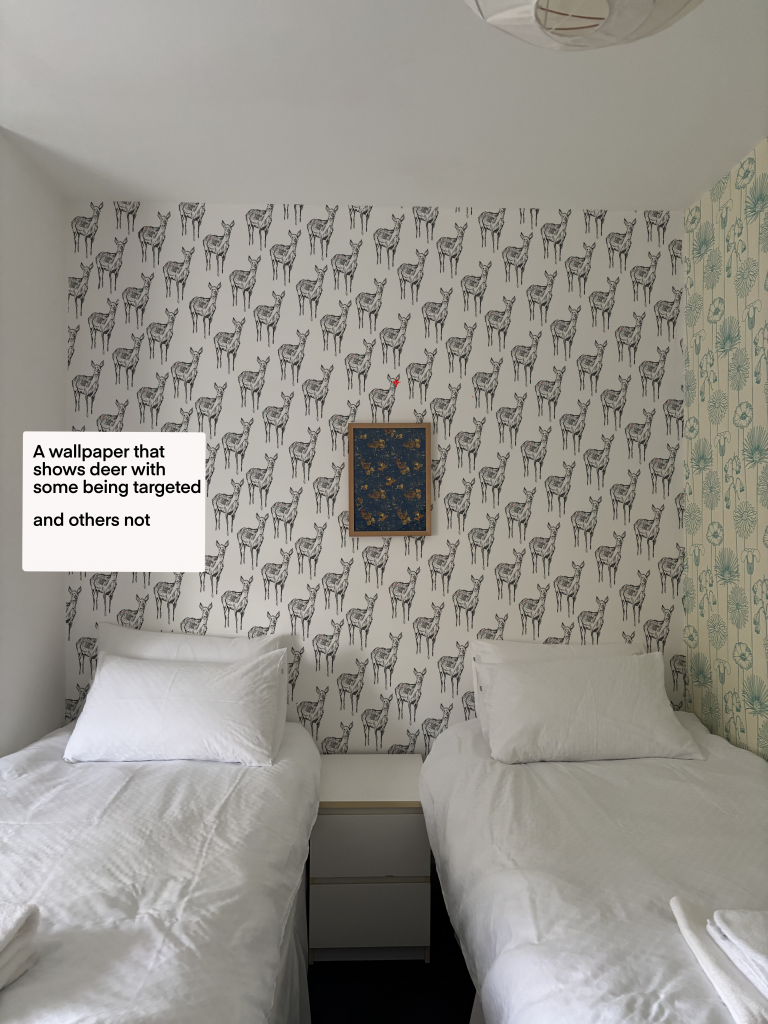
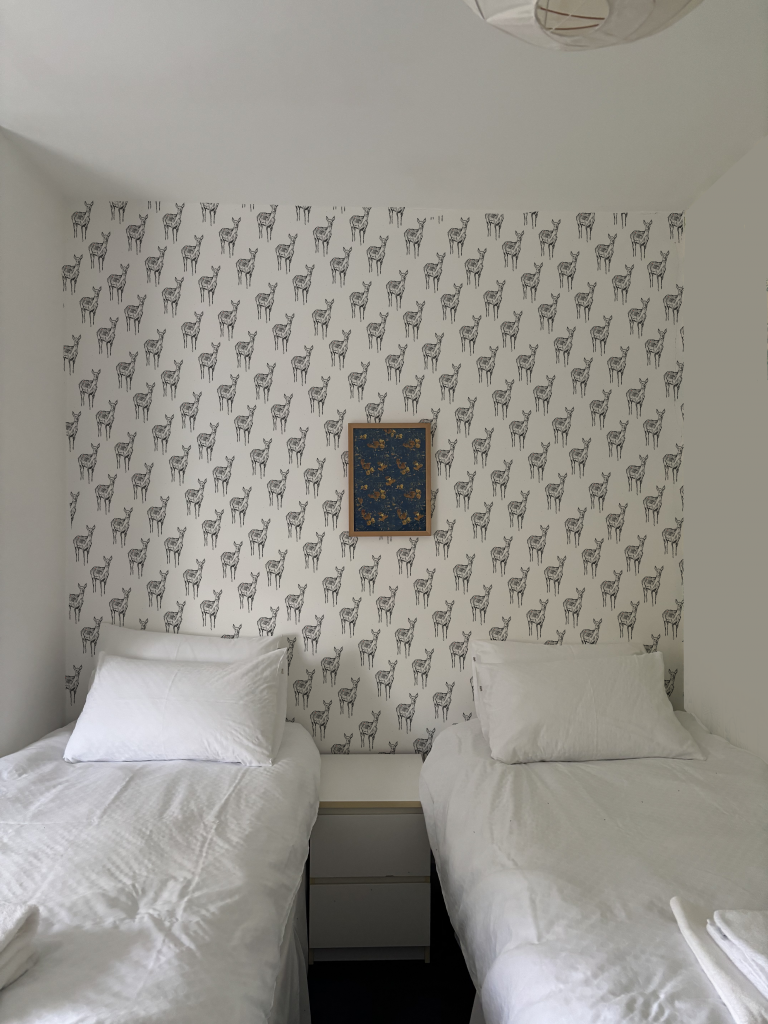
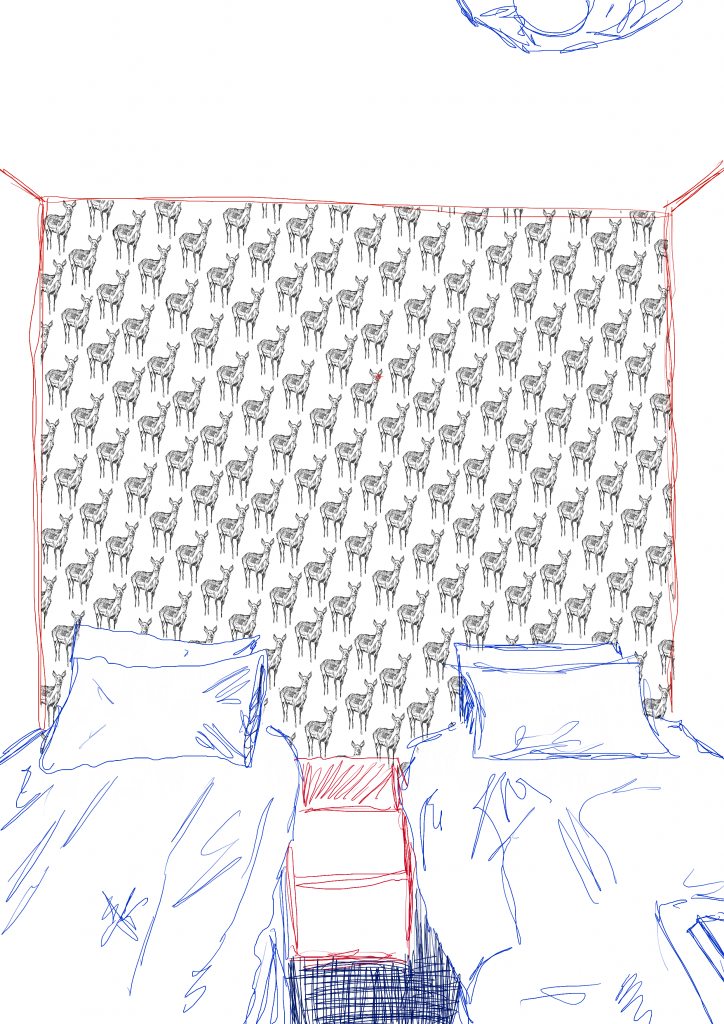
    Having made repeating patterns, I put them into mock-ups of the room. I liked seeing my designs in the setting and it gave me a good visual to work from
  • Tiles, Wall Paper & Tapestries

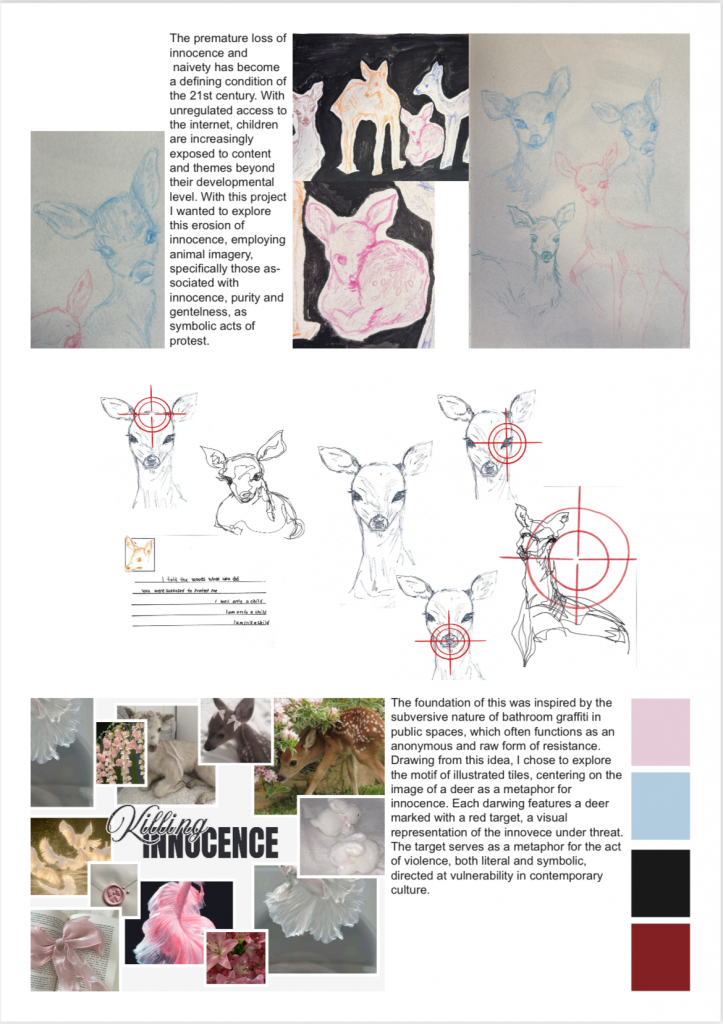
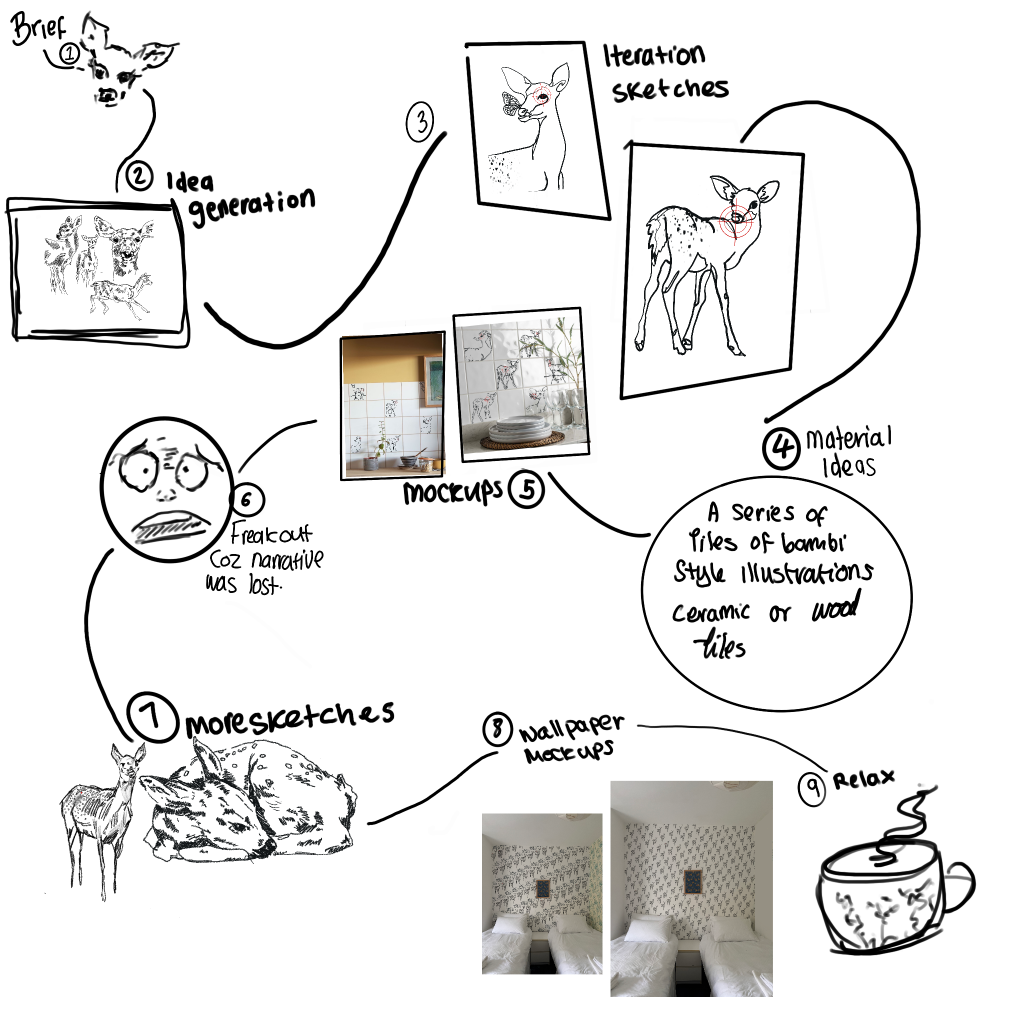
    Tiles: Initially I wanted to create a series of tiles to communicate my topic. However I think my theme got a bit lost in the translation of it with the focus switching from lose of innocence to the idea of not killing animals. While that is a good theme it wasn’t what I was wanting to communicate.

    Wallpaper:

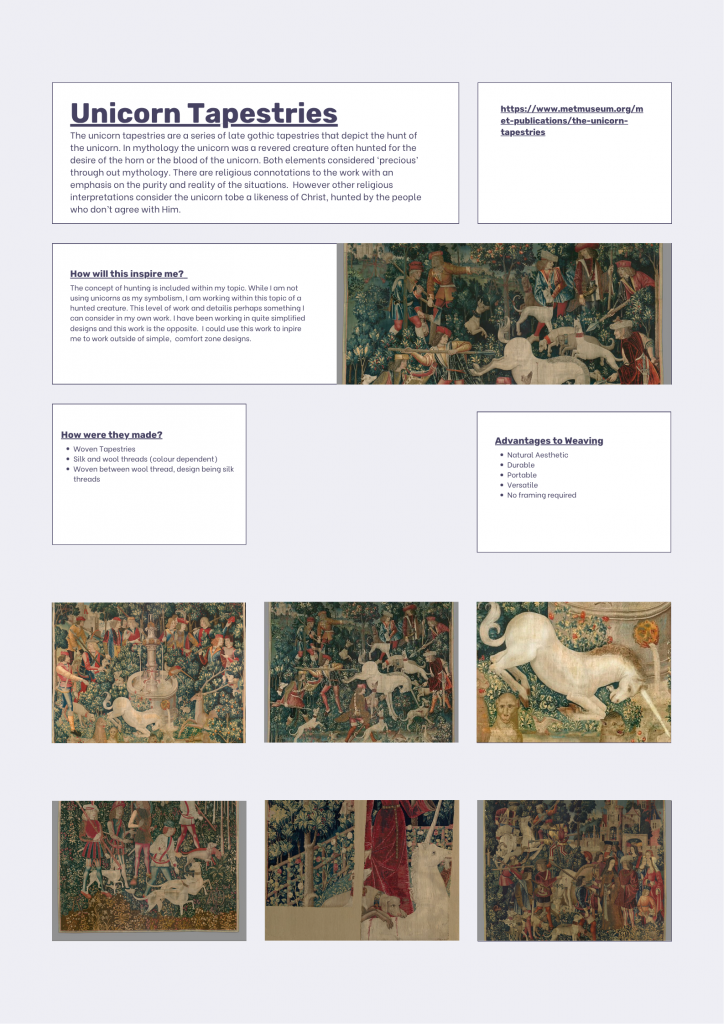
    When I realised that tiles weren’t the most appropriate way of communicating, I started looking at wallpapers and tapestries.

    I liked the concept of the wall paper and that was the outcome I decided to focus on. In retrospect the wallpaper would have worked more successfully with a different topic. However I enjoyed making different repeat patterns for this.

  • Open Studio Prep

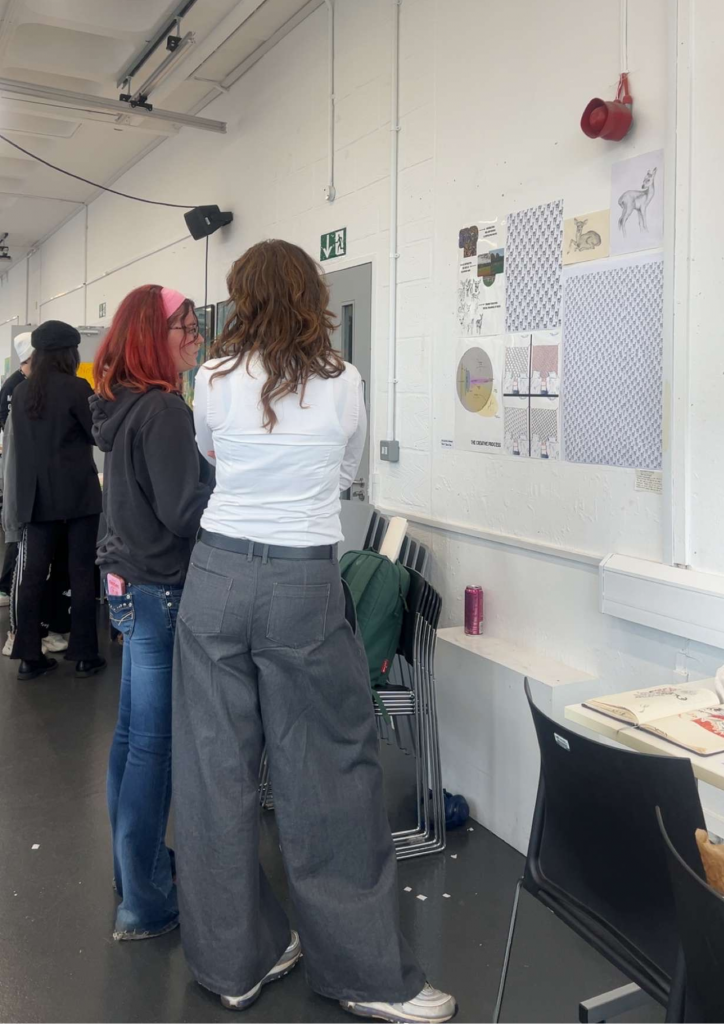
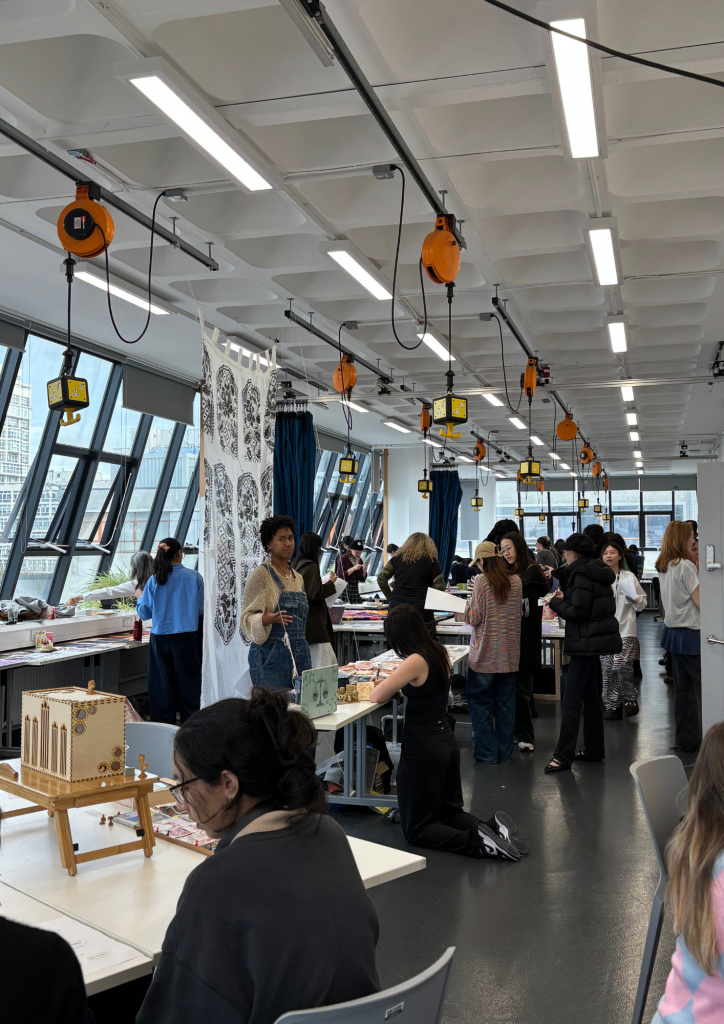
    Work presented physically in the style of design festivals.

    Importance of intentionality in world building our designs and narratives

    1. Material exploration and a multi-sensorial approach
    2. Unfinished work is ok – they want concept not entirely finished pieces
    3. Clearly show the journey through the project
    4. Highlight what still needs working out (size of images, repeated patterns etc) ask myself ‘What needs fixing?’

    Methods for presenting developmental work

    1. Process Mapping – Feelings throughout the making process, What is the process? Why is the process? How can process be communicated?

    2. Exploration mapping – A mixed media board of sources, textures and other elements. Mixed media, collaged boards

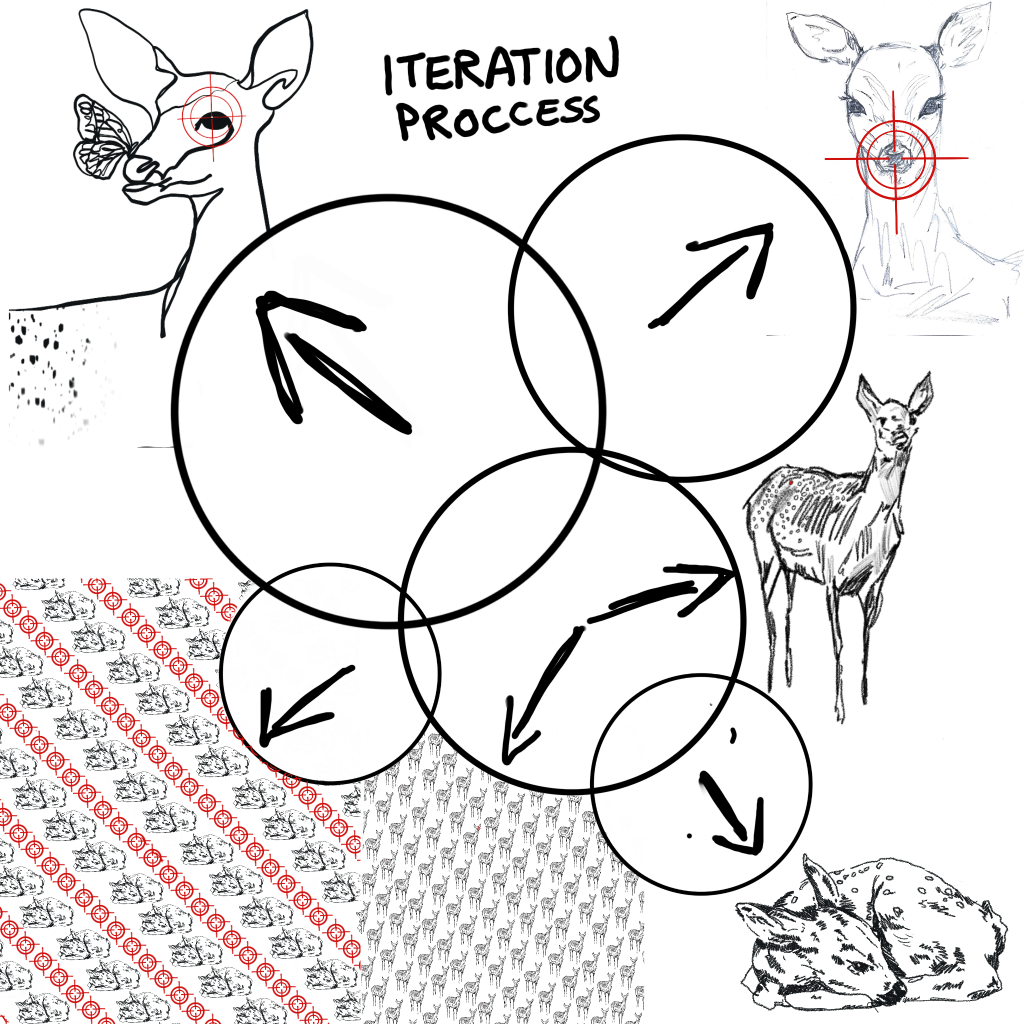
    3. Iterative sequences – showing process through iteration grids and sequences

    4. Contextual mapping/ site response – positioning work within the space its supposed to fit in

    Methods for Presenting Outcomes

    1. Mockups or proposal drawings – design positioned in the space

    2. Prototypes/interactive models – consider multiple outputs: What are you trying to say and do you need multiple outputs to say it?

  • Site Visit

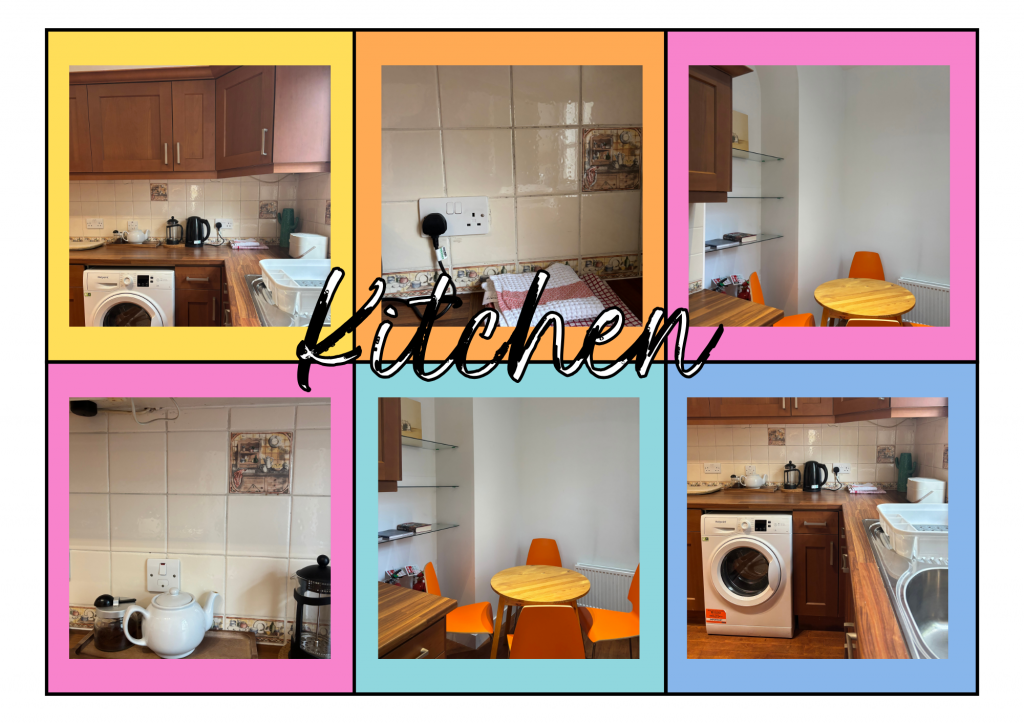
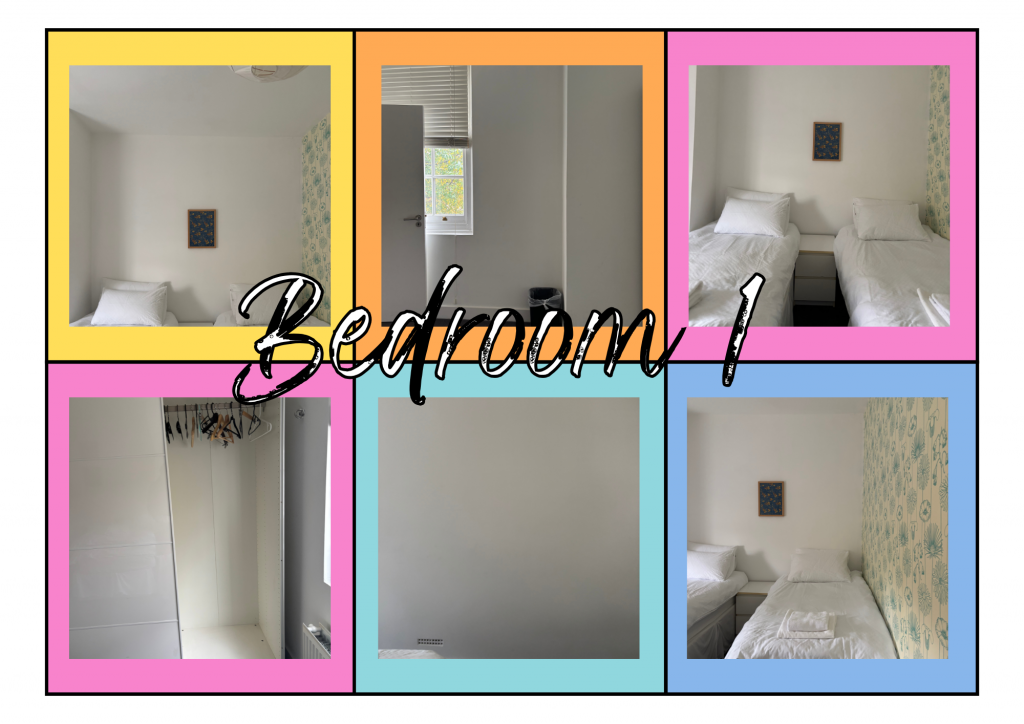
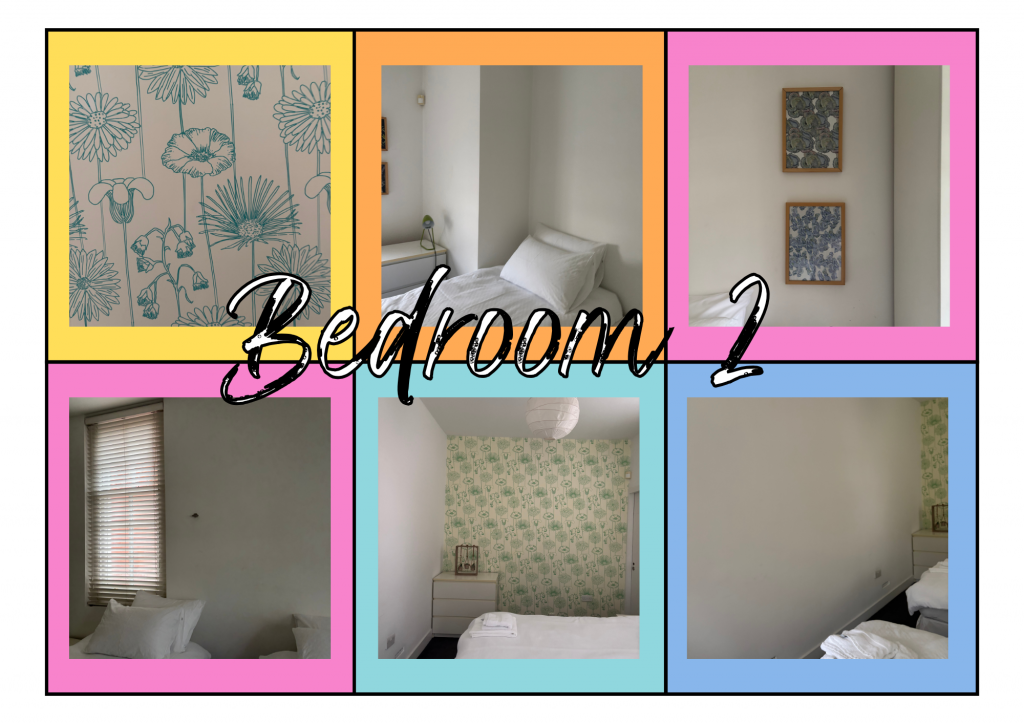
    I had originally planned to place my design on tiles in the kitchen. Following some feedback and comments from peers and tutors I realised this had the potential to change the narrative of the story away from my original narrative. This was further confirmed once I went to the flat itself and saw what it looked like. This helped inform where my designs would be best situated within the flat and the narrative.

    After this site visit I believe bedroom 1 to be the most appropriate setting for my designs. However I did think tiles would seem somewhat out of place in a bedroom so returned to the drawing board to see what other elements of surface design would be more appropriate